The 4Cs of Diamonds
The universal language for evaluating diamond quality — and the knowledge that lets you pay a fraction of retail
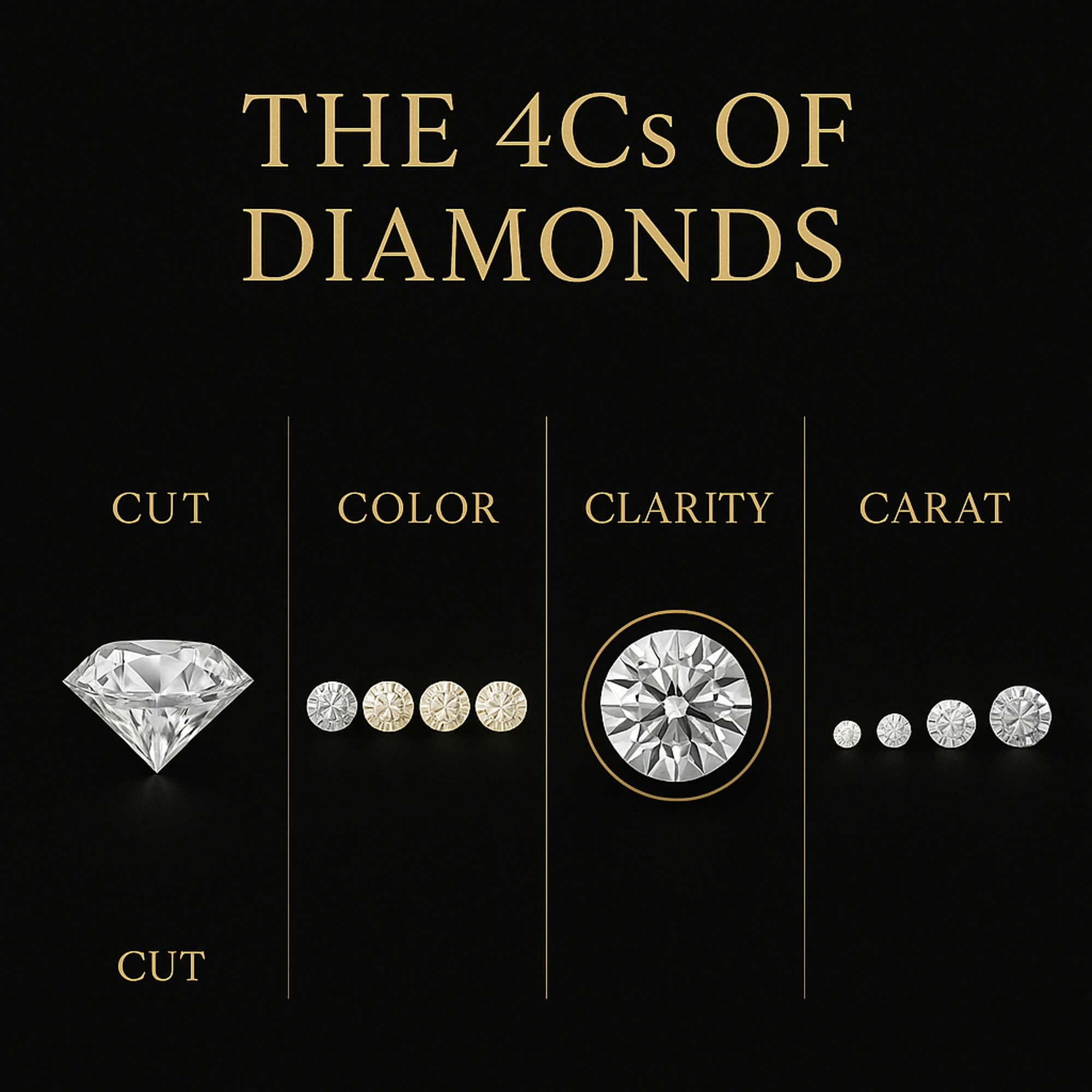
Cut, Color, Clarity, and Carat — The four pillars of diamond evaluation
Understanding Diamond Quality
The 4Cs—Cut, Color, Clarity, and Carat—are the globally recognized standards for assessing diamond quality. Established by the Gemological Institute of America (GIA) in the 1950s, this grading system provides an objective framework for comparing diamonds worldwide.
Every diamond certified by IGI (International Gemological Institute) is evaluated on all four criteria, giving you complete transparency about what you're purchasing. Once you understand these factors, you can read a diamond the way our buyers do — and recognize true value instead of paying for a label.
For more than 20 years, 2N Diamonds bought and graded at the wholesale level. We reject roughly 70% of the diamonds we review; only stones that pass our strict tests across all four Cs are offered to you. That discipline is why our prices run at least 45% below boutique — and why you can buy with confidence.
While all four Cs matter, Cut is often considered the most important because it has the greatest impact on a diamond's visual beauty—a well-cut diamond will sparkle brilliantly even with slightly lower color or clarity grades.
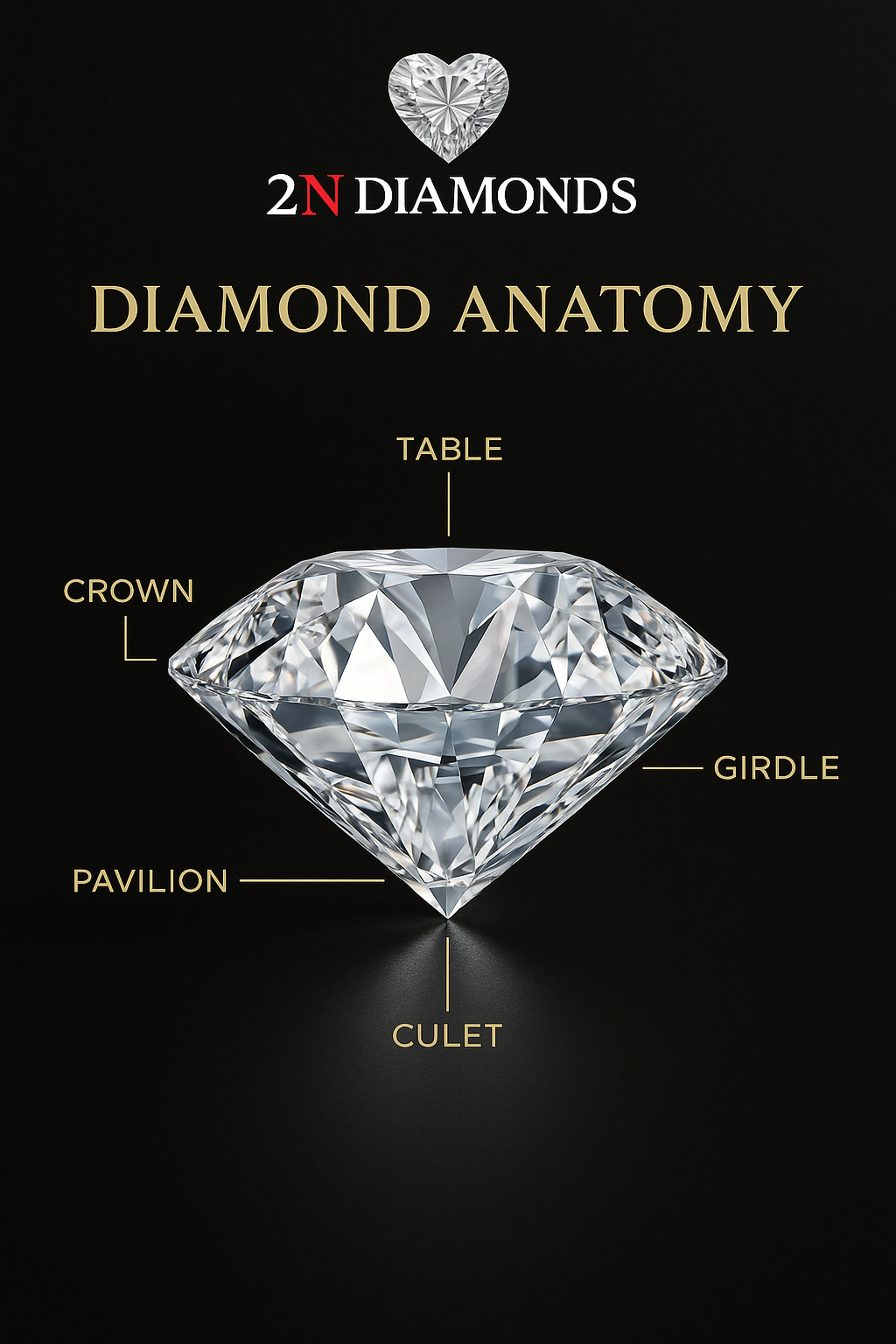
The anatomy of a diamond showing table, crown, girdle, pavilion, and culet
1. Cut — The Sparkle Factor
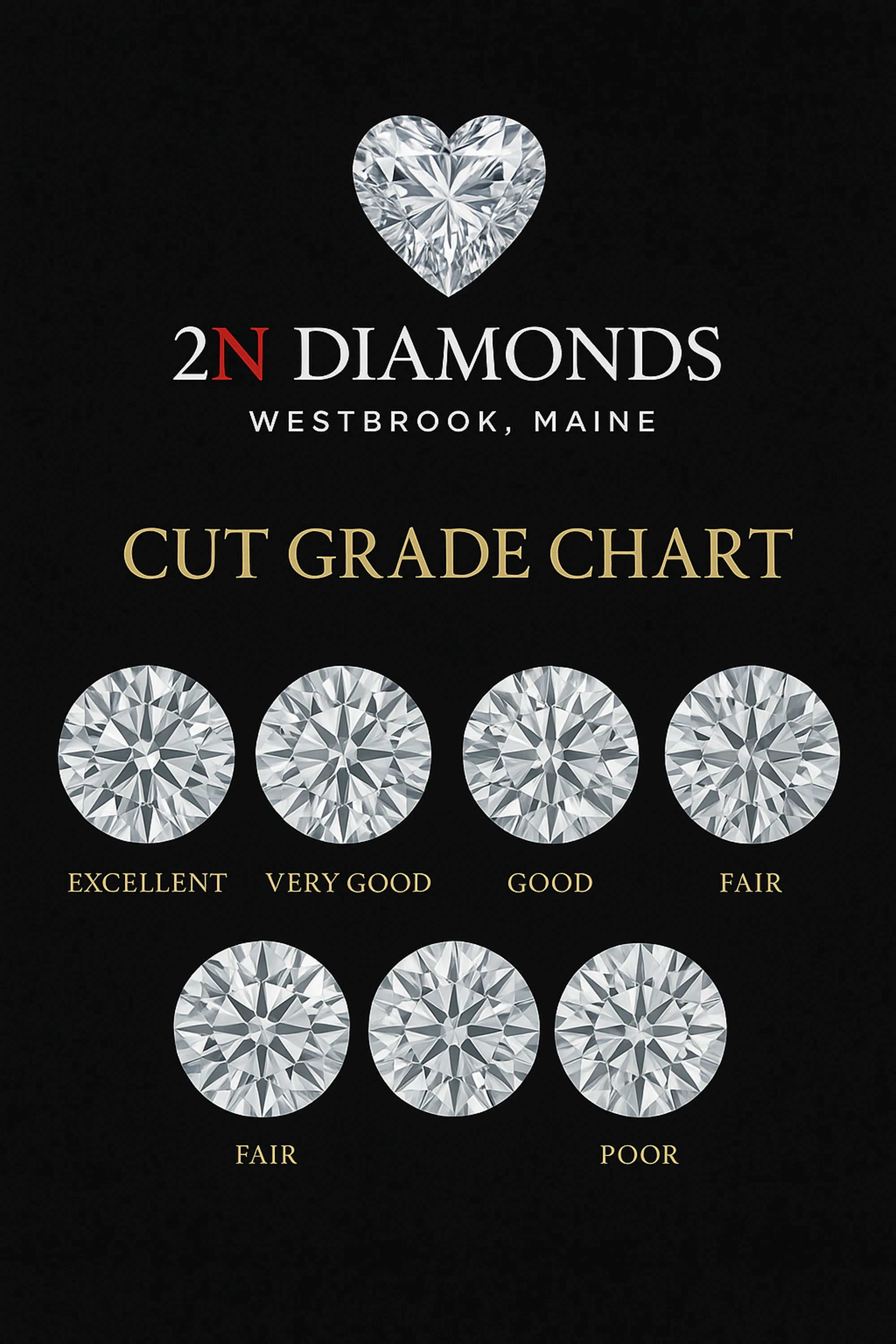
How cut quality affects light performance
Cut refers to how well a diamond's facets interact with light. It's not about shape (round, oval, etc.) but about the quality of proportions, symmetry, and polish that determine how brilliantly a diamond sparkles.
A well-cut diamond reflects light internally from facet to facet, then disperses it through the top, creating three optical effects:
• Brilliance: The total white light reflected
• Fire: The dispersion of light into spectral colors
• Scintillation: The sparkle pattern when the diamond moves
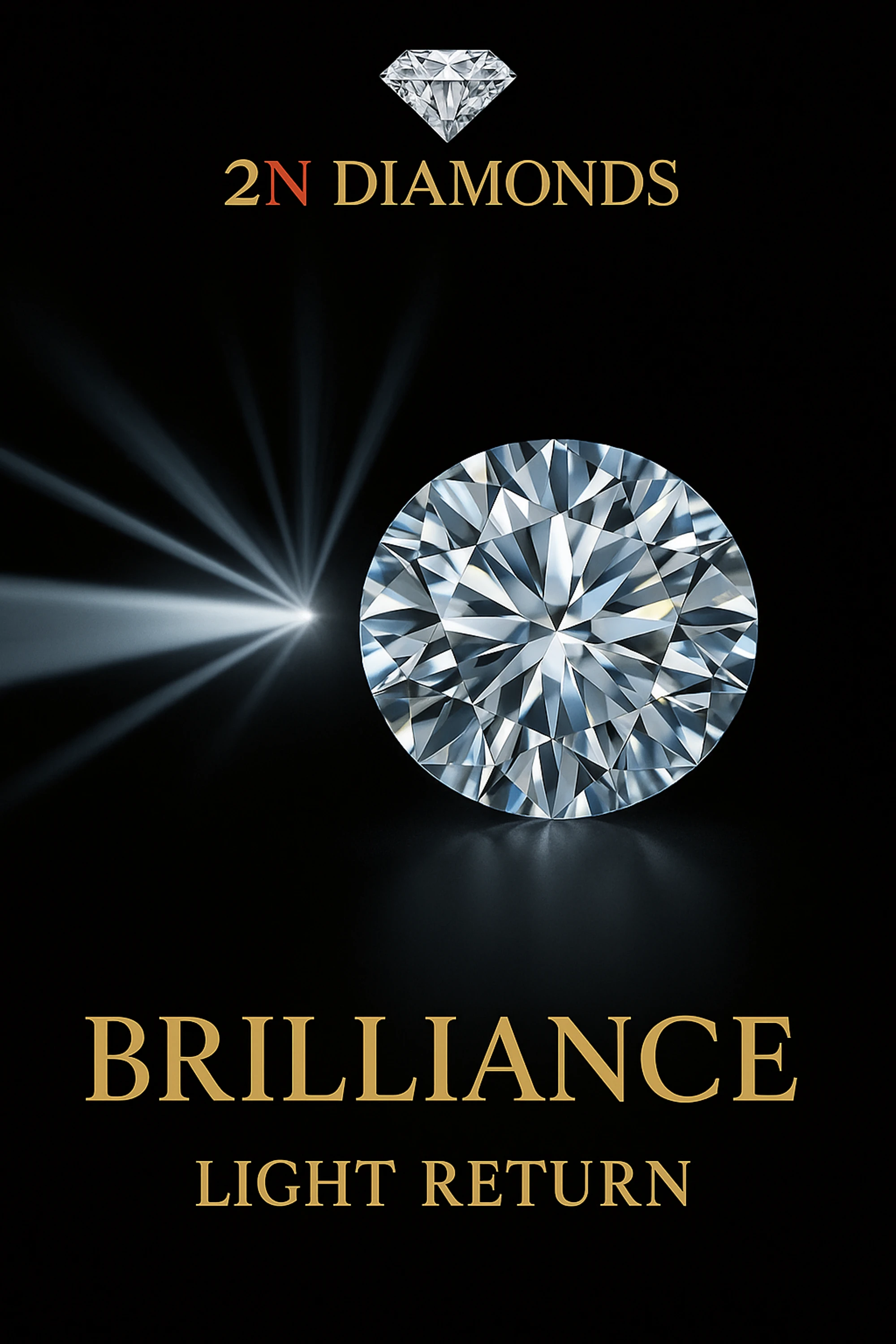
Brilliance — White light return
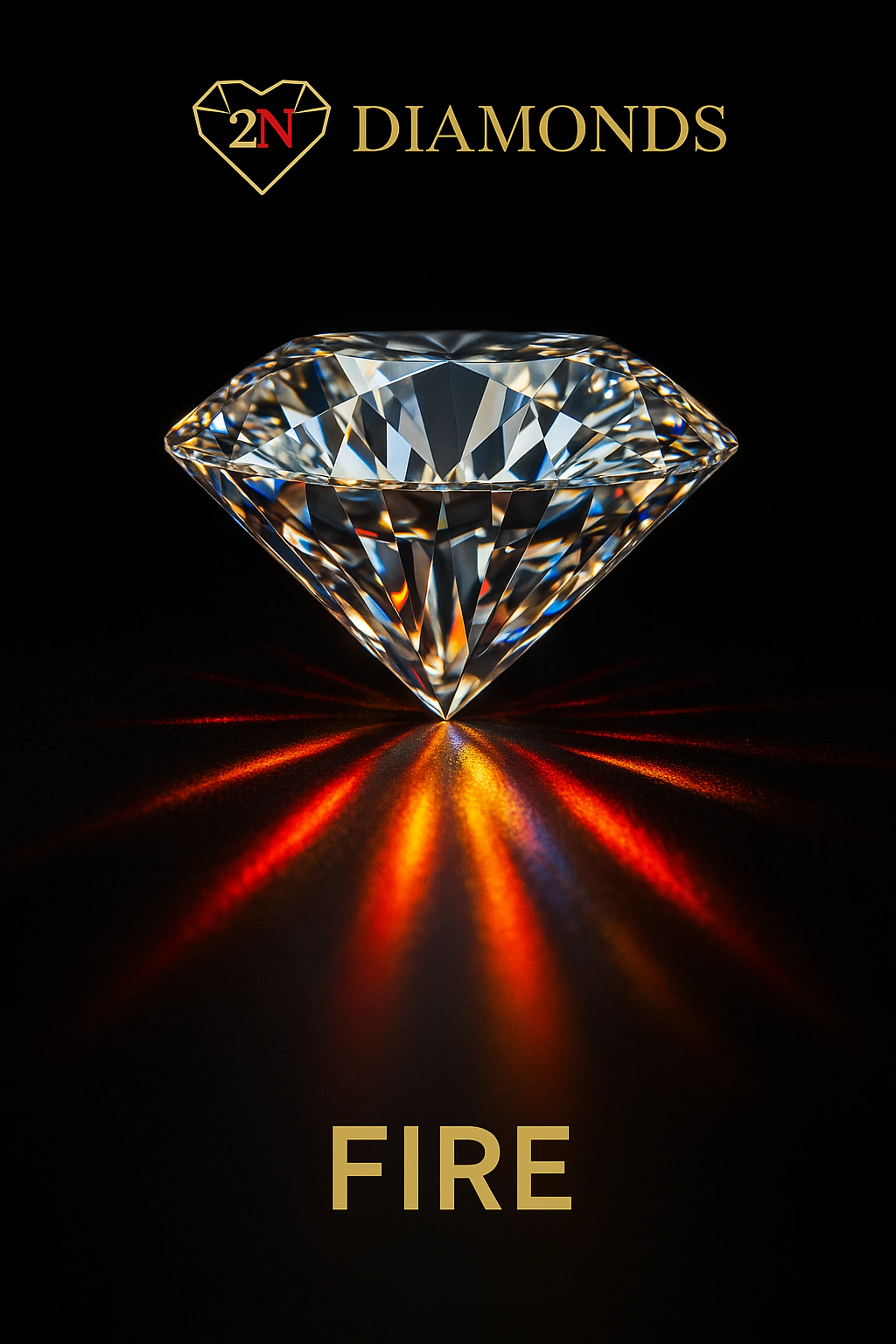
Fire — Rainbow light dispersion
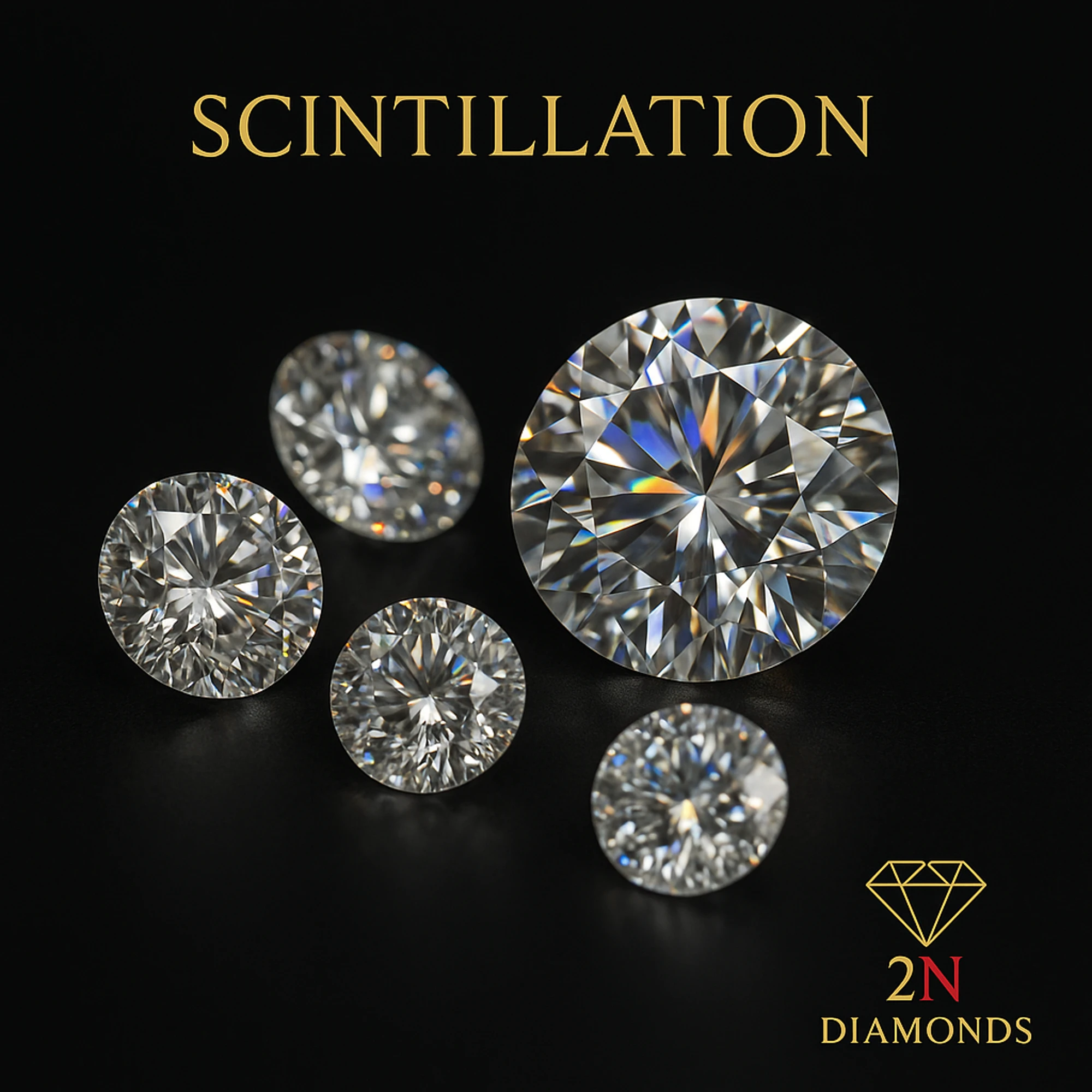
Scintillation — Dynamic sparkle
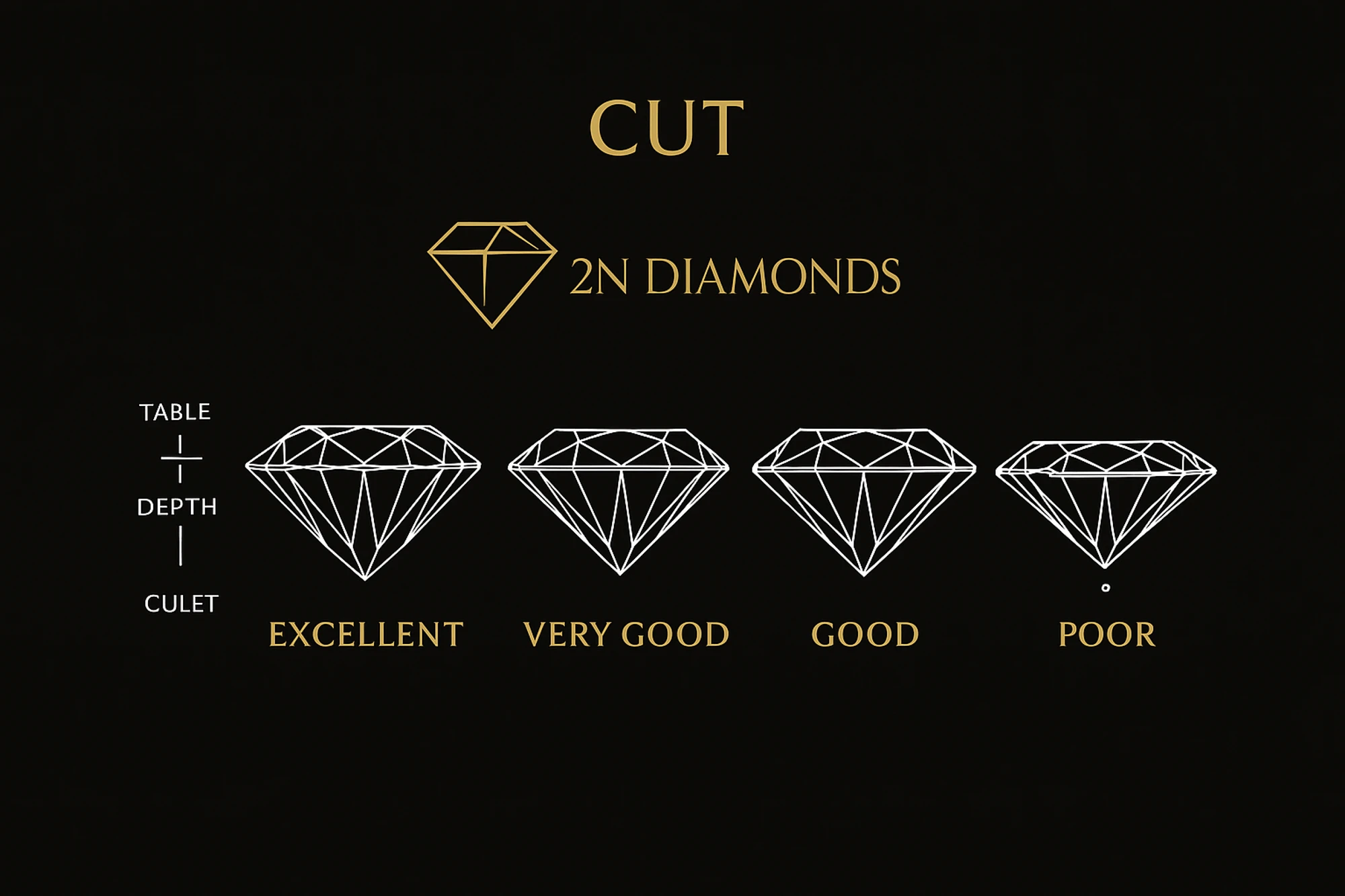
Diamond proportions and angles
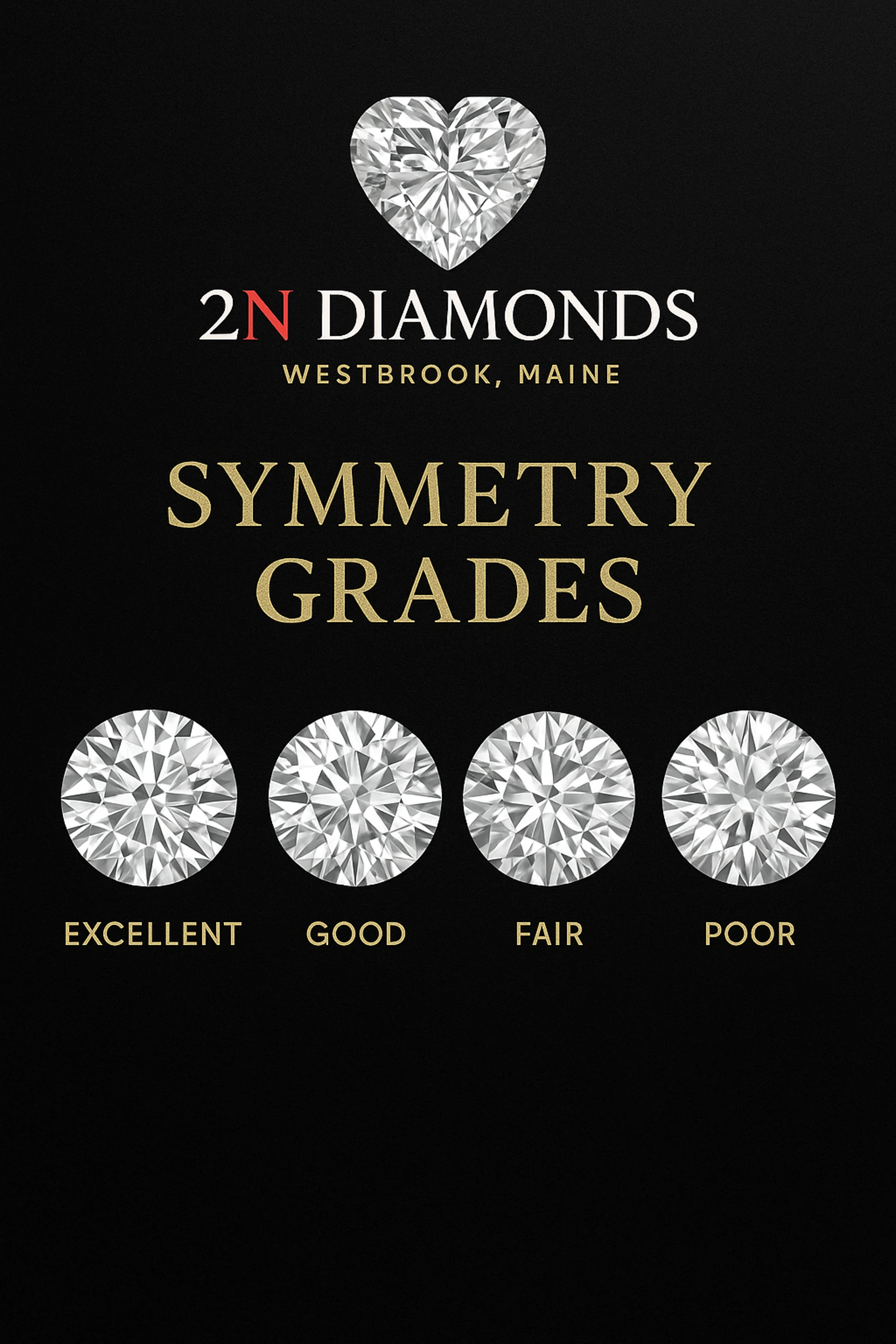
Symmetry grades and their visual impact
Hearts & Arrows
The pinnacle of diamond cutting precision is the Hearts & Arrows pattern. When viewed through a special scope, an ideally cut round brilliant displays 8 symmetrical hearts from the bottom and 8 arrows from the top—a testament to perfect proportions and alignment.
This optical phenomenon only appears in diamonds with exceptional symmetry, making Hearts & Arrows diamonds among the most sought-after for their superior light performance.
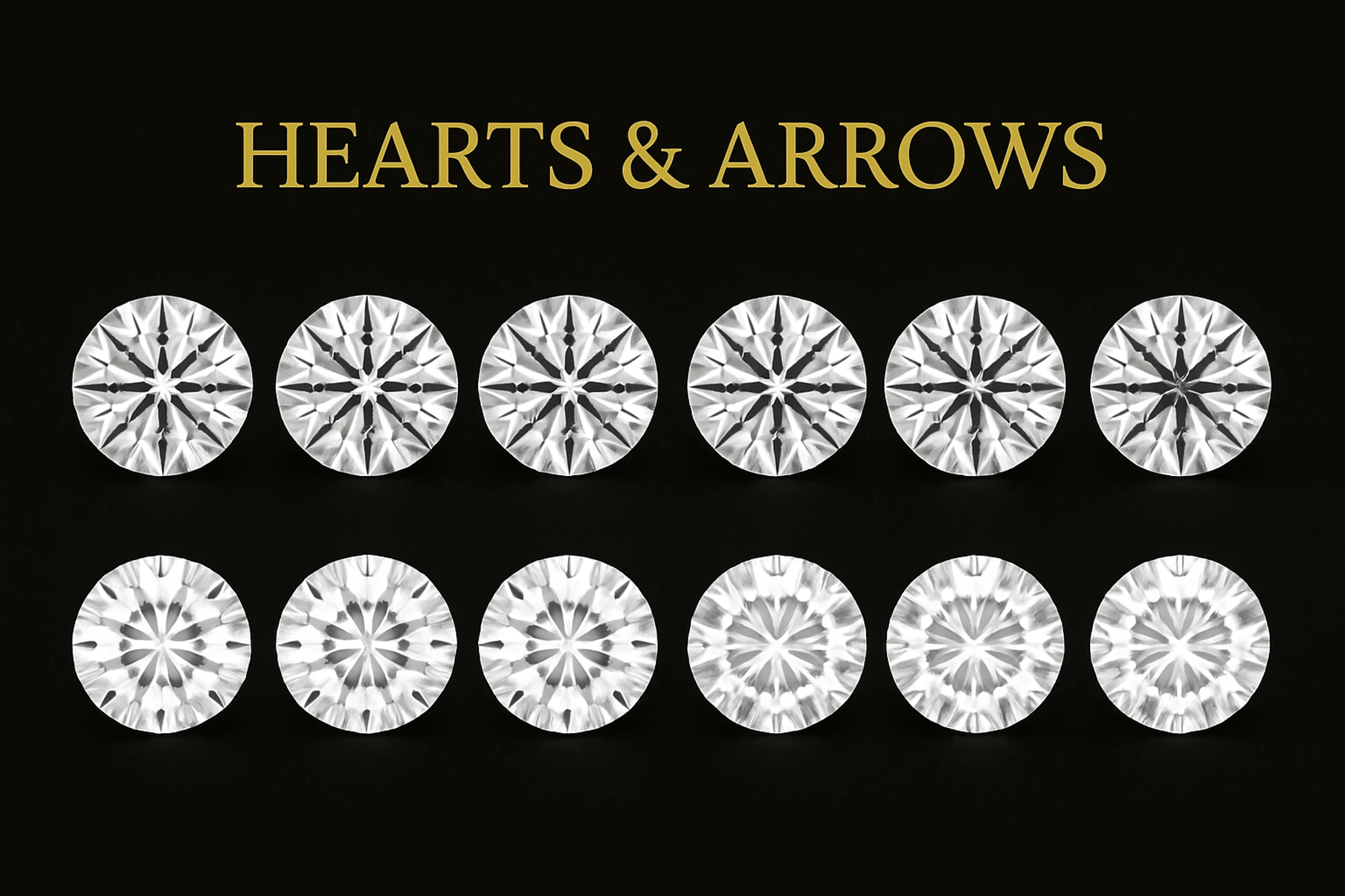
Hearts & Arrows pattern in an ideal cut diamond
2. Color — The Purity of Light
Color in white diamonds actually refers to the absence of color. The most valuable diamonds are completely colorless, allowing light to pass through unimpeded for maximum brilliance.
The color scale runs from D (colorless) to Z (light yellow/brown). Most diamonds contain trace amounts of nitrogen, which creates a subtle yellow tint. The less color present, the higher the grade and value.
Lab grown diamonds from 2N Diamonds consistently achieve exceptional color grades (D-F) because the controlled growth environment minimizes impurities that cause coloration.
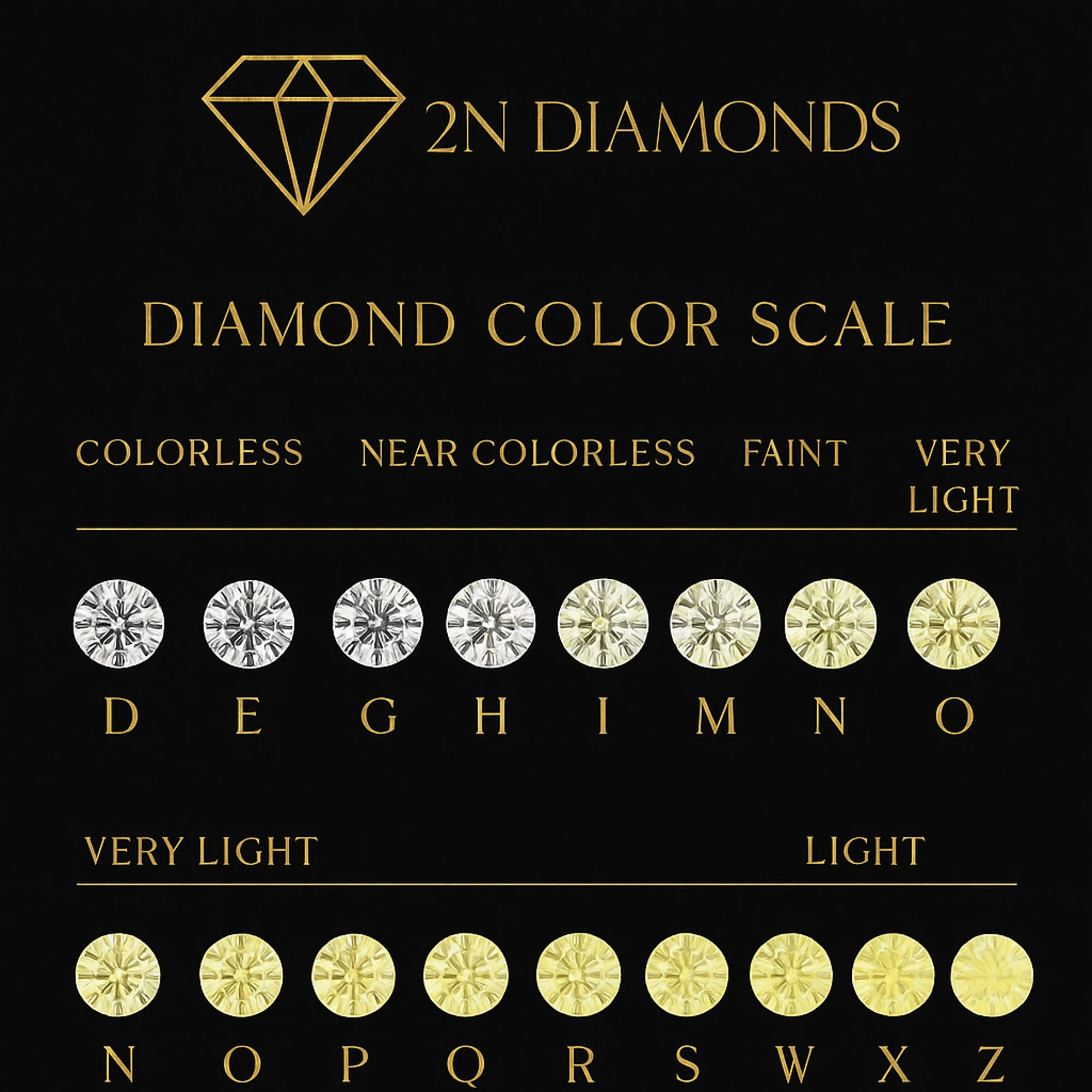
The D-Z color grading scale
3. Clarity — Nature's Fingerprint
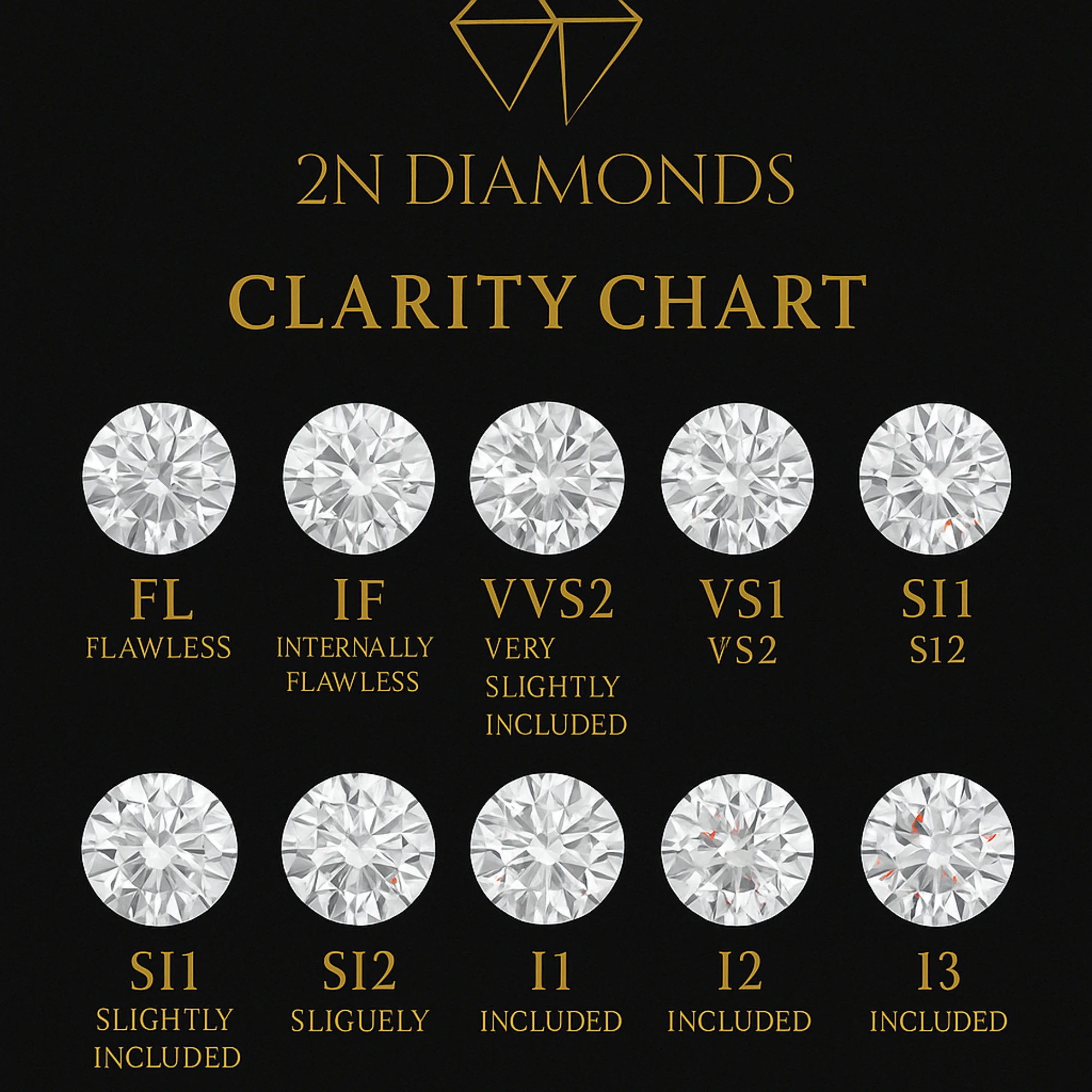
Visual comparison of clarity grades
Clarity measures the presence of internal characteristics (inclusions) and external characteristics (blemishes). These natural birthmarks occurred during the diamond's formation and serve as unique identifiers.
The clarity scale ranges from Flawless (FL)—no inclusions visible under 10x magnification—to Included (I3) where inclusions are obvious to the naked eye.
For the best value, consider VS1-VS2 grades. These diamonds appear flawless to the naked eye but cost significantly less than Flawless or VVS grades. At 2N Diamonds, VS1 is our baseline standard.
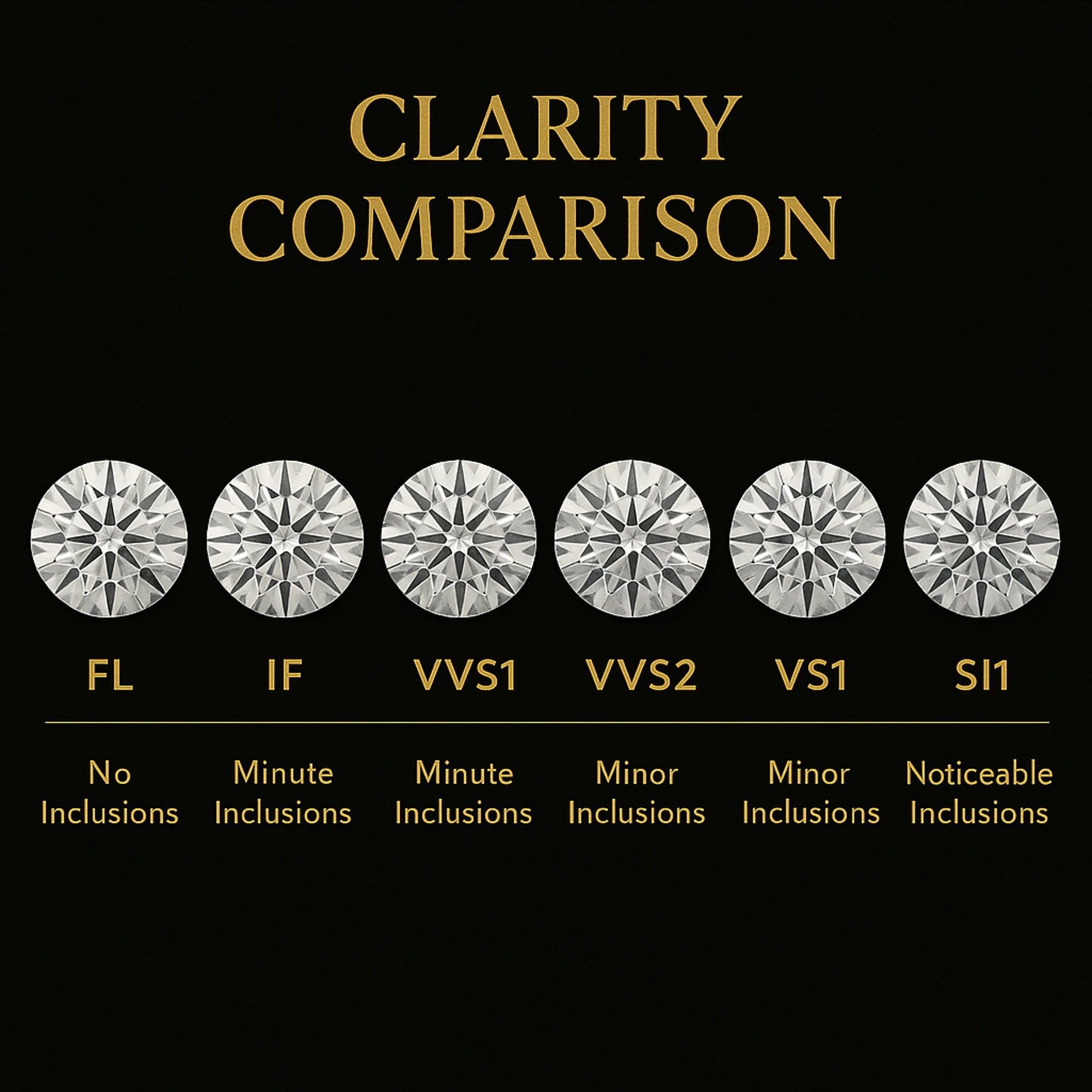
Side-by-side clarity comparison
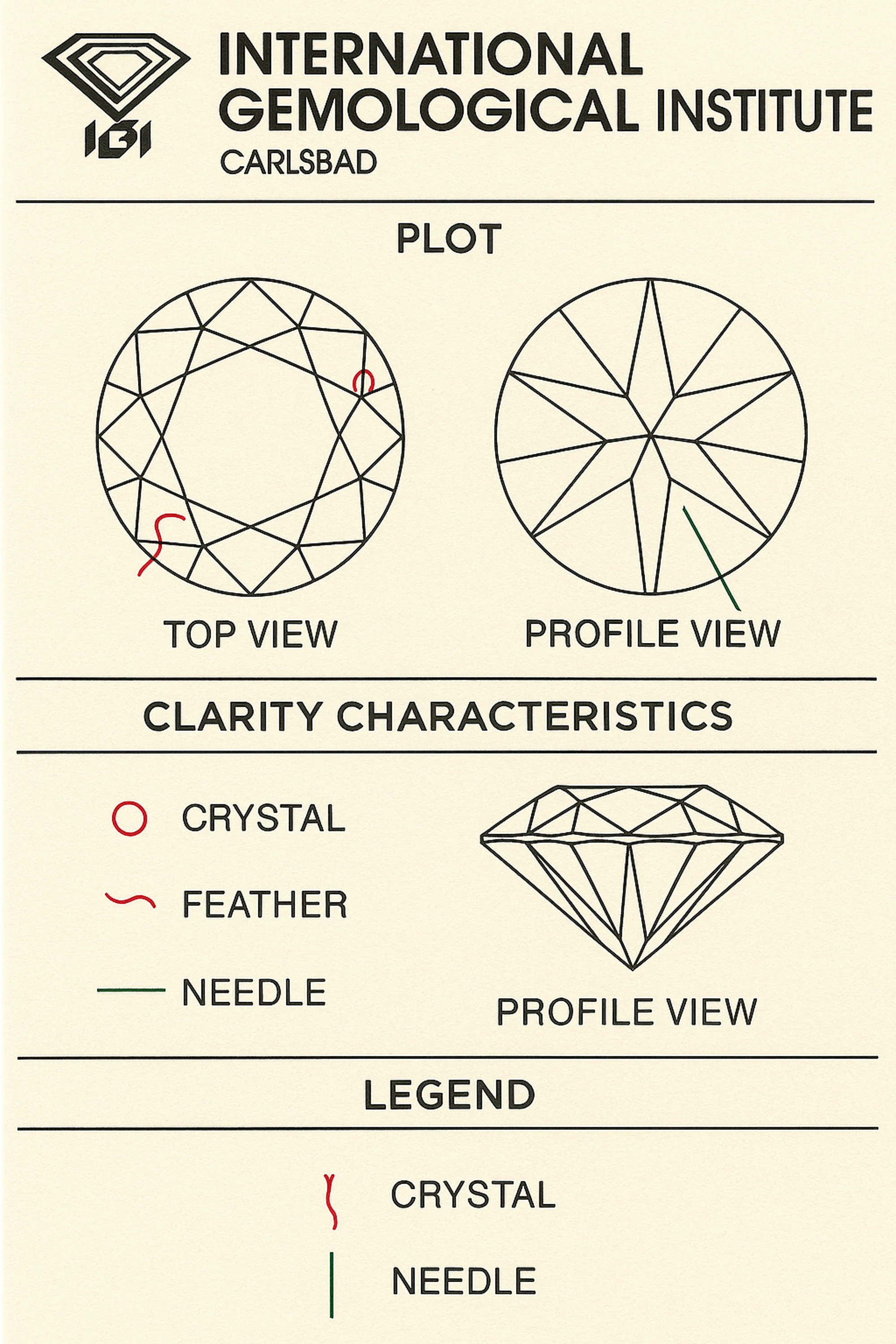
IGI clarity plot showing inclusion locations
4. Carat — The Weight of Beauty
Carat is the standard unit of weight for diamonds. One carat equals 200 milligrams (0.2 grams). The term derives from carob seeds, which were historically used as balance weights due to their uniform size.
Carat weight is often expressed in "points" where 1 carat = 100 points. A 0.50ct diamond is called a "50-pointer" or "half-carat."
Diamond prices increase exponentially with carat weight because larger diamonds are progressively rarer. A 2-carat diamond costs significantly more than two 1-carat diamonds of equal quality.
At 2N Diamonds, we offer diamonds from 1.00 to 10.00 carats in precise 0.25-carat increments, giving you flexibility to find the perfect size for your setting and budget.
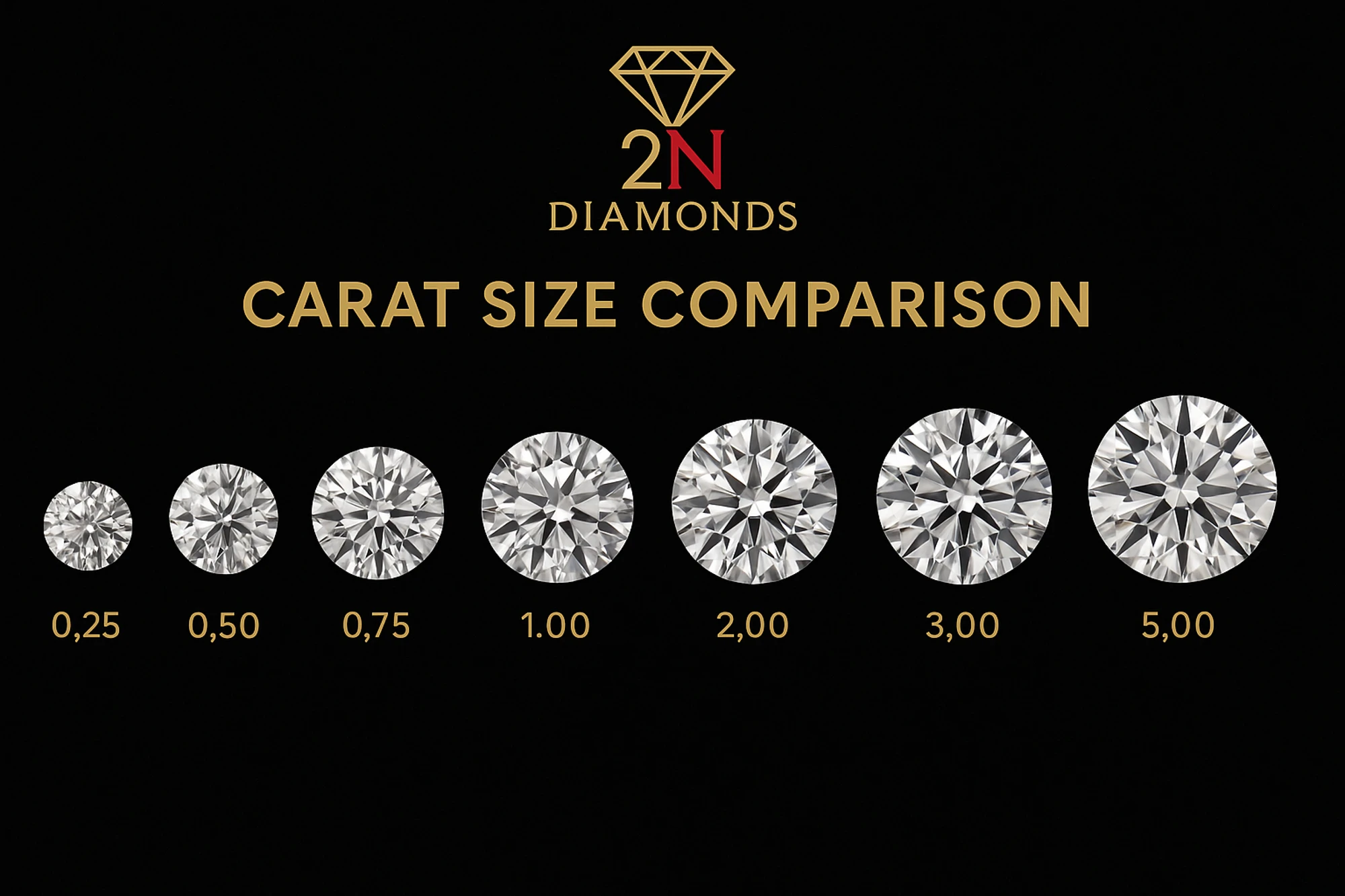
Visual comparison of different carat weights
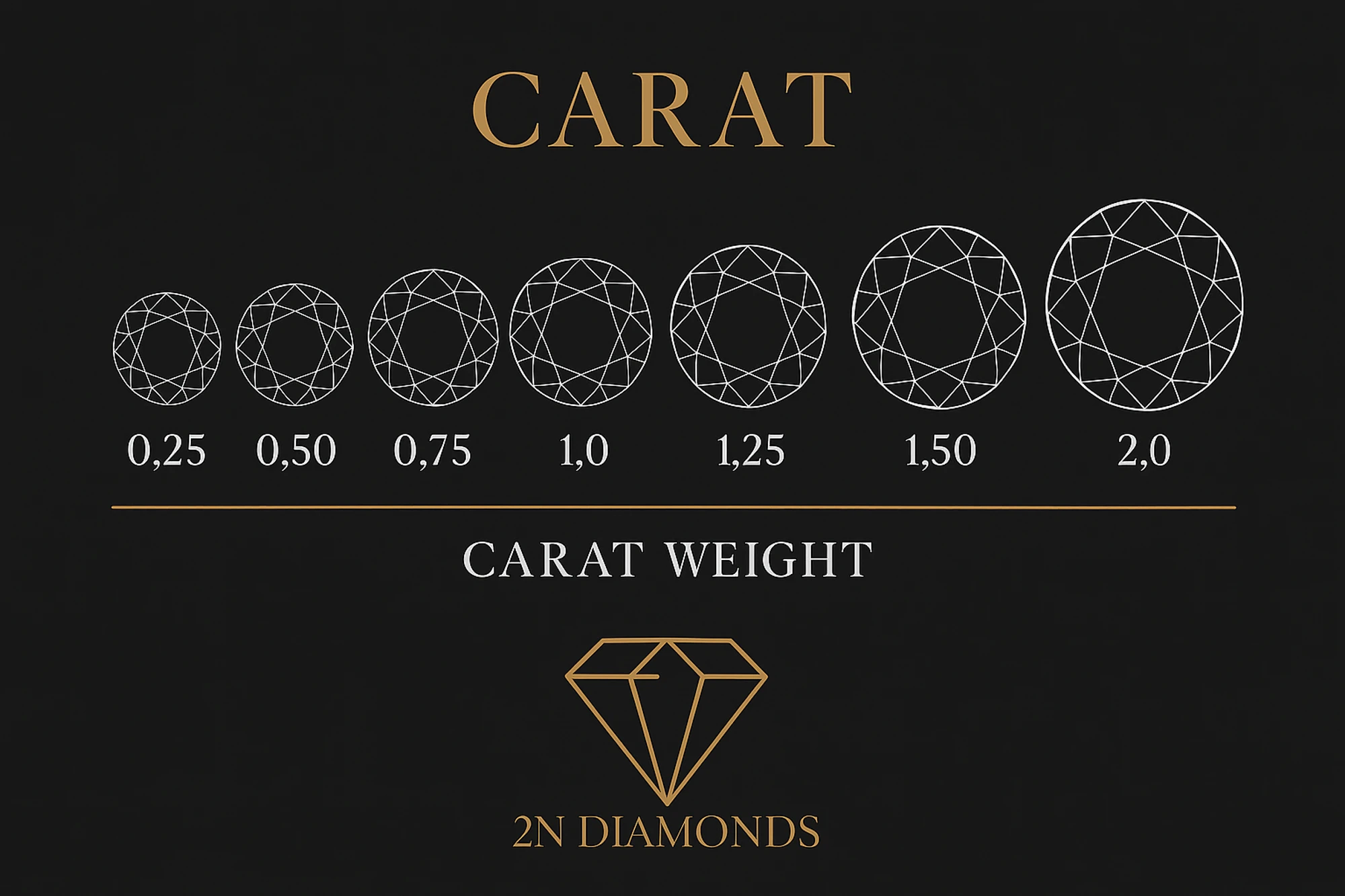
Carat weight chart showing size progression
Find Your Perfect Balance
Understanding the 4Cs helps you prioritize what matters most to you. Whether you value maximum sparkle (cut), icy whiteness (color), purity (clarity), or impressive size (carat), our concierge team can help you find the perfect diamond within your budget.
Explore Our Diamonds