Lab Grown vs Mined
The same diamond, two origins — and the single decision that can cut your cost nearly in half
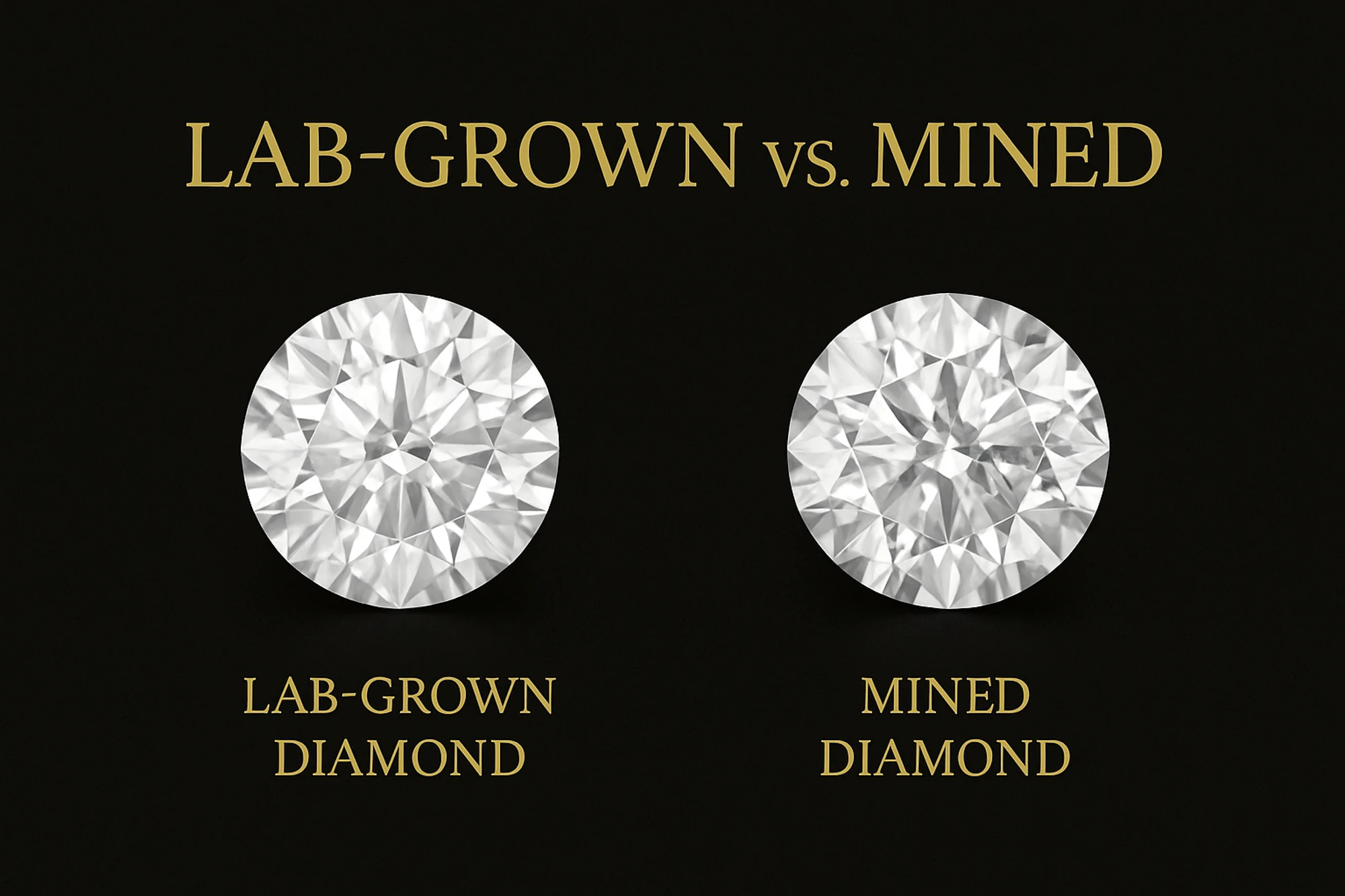
Lab grown and mined diamonds — identical in every way that matters
The Same Diamond, Different Origin
Here's the fundamental truth: lab grown diamonds are real diamonds. They have the same chemical composition (pure carbon), the same crystal structure, the same optical properties, and the same physical hardness as diamonds formed in the earth billions of years ago.
The only difference is where and when they formed. Natural diamonds crystallized deep in Earth's mantle over 1-3 billion years. Lab grown diamonds crystallize in advanced facilities over several weeks. The end result is chemically and physically identical.
Even expert gemologists cannot distinguish between them without specialized equipment designed to detect subtle differences in trace elements and growth patterns—differences that have no impact on beauty, durability, or brilliance.
So the real question is not which is the better diamond — they are the same diamond. The question is how much you are willing to pay for origin alone. Choosing lab grown is how our customers own a larger, finer, IGI-certified stone for at least 45% below boutique. For more than 20 years we bought at the wholesale level; now that access, and that price, is open to you.
Identical Properties
Side-by-Side Comparison
| Characteristic | Lab Grown | Mined |
|---|---|---|
| Composition | Pure Carbon | Pure Carbon |
| Brilliance & Fire | Identical | Identical |
| Durability | Forever | Forever |
| Certification | IGI Certified | GIA/IGI Certified |
| Formation Time | 2-4 weeks | 1-3 billion years |
| Environmental Impact | Minimal | Significant |
| Ethical Concerns | None | Variable |
| Traceability | 100% Known Origin | Often Uncertain |
| Price (Comparable Quality) | 60-80% Less | Premium |
| Resale Value | Lower | Higher (but still low) |
Environmental Considerations
Lab grown diamonds: A more sustainable choice
Diamond mining has significant environmental impacts:
• Land disruption: Open-pit mines can span several square kilometers
• Water usage: Millions of gallons per operation
• Energy consumption: Heavy machinery and processing
• Ecosystem damage: Habitat destruction and soil erosion
• Carbon emissions: Transportation across global supply chains
Lab grown diamonds significantly reduce these impacts:
• No mining: Zero land excavation required
• Controlled water use: Closed-loop systems recycle water
• Renewable energy: Many facilities run on solar/wind
• Small footprint: Production facilities are compact
• Local production: Reduced transportation emissions
Ethical Transparency
The diamond mining industry has made progress since the "blood diamond" crisis of the 1990s, but concerns remain. The Kimberley Process, while well-intentioned, has limitations in tracking diamonds through complex supply chains.
Issues that can still affect mined diamonds:
• Worker safety: Mining conditions vary widely
• Fair wages: Not all operations pay equitably
• Community impact: Displacement and resource conflicts
• Supply chain opacity: Diamonds change hands many times
Lab grown diamonds offer complete traceability. You know exactly where your diamond was created, by whom, and under what conditions. There's no uncertainty about ethical sourcing—the entire journey is documented.
Complete Peace of Mind
Every 2N Diamonds stone can be traced to:
No unknowns. No compromises.
The Value Advantage
Lab grown diamonds typically cost 60-80% less than comparable mined diamonds. This isn't because they're inferior—it's because production doesn't require moving tons of earth, and supply isn't artificially constrained.
What does this mean for you?
Bigger Diamond
Get a 2ct lab grown diamond for the price of a 1ct mined diamond
Better Quality
Upgrade to higher color, clarity, or cut within the same budget
Save Significantly
Keep thousands for the wedding, honeymoon, or your future together
A Note on Resale Value
It's true that mined diamonds generally have higher resale value than lab grown diamonds. However, this consideration is often overstated:
• All diamonds depreciate significantly once purchased—typically 50-70%
• Very few people ever resell engagement rings
• The "investment" argument rarely applies to jewelry-grade diamonds
• The savings from choosing lab grown far exceed potential resale differences
If you're buying a diamond as an investment, neither option is ideal. If you're buying a symbol of love to wear and cherish, lab grown offers identical beauty at a fraction of the price—with a clear conscience about its origin.
Making Your Choice
Choose Lab Grown If...
✓ You want maximum beauty for your budget
✓ Environmental sustainability matters to you
✓ You want guaranteed ethical sourcing
✓ You prioritize the symbol over the origin story
✓ You'd rather invest savings elsewhere
Choose Mined If...
✓ The "billions of years old" origin story is meaningful
✓ Tradition and history are important to you
✓ Potential resale value is a priority
✓ You prefer natural rarity over identical quality
✓ Budget is not a primary concern
There's no wrong answer—only the choice that's right for you.
Experience the Difference
See for yourself why thousands of couples are choosing lab grown diamonds. Browse our collection of IGI-certified stones—identical in beauty to mined diamonds at a fraction of the price.
Explore Our Diamonds