Cutting & Polishing
The master craftsmanship that turns a rough crystal into fire — the work you are really paying for
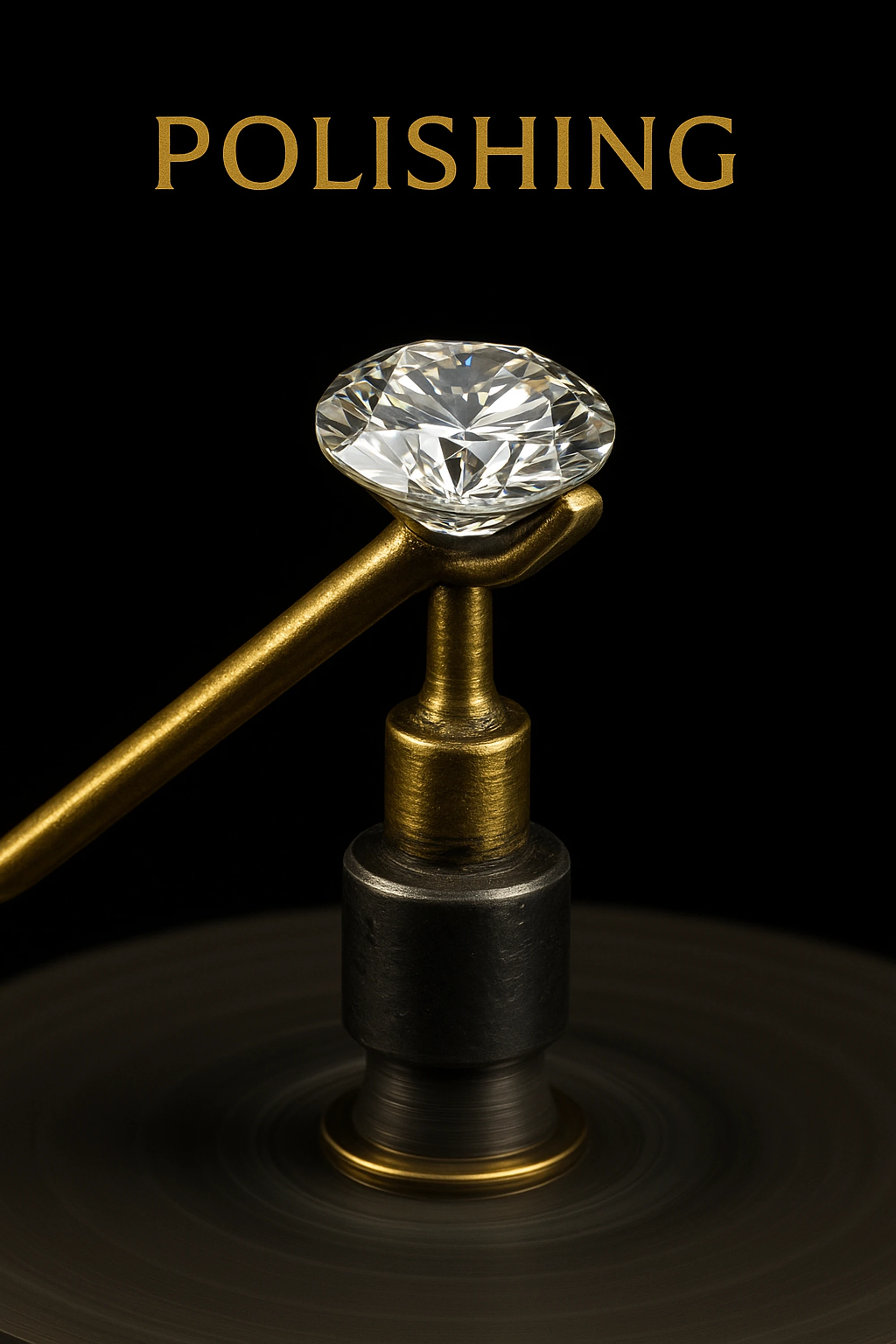
A master craftsman polishing a diamond to perfection
From Rough to Radiant
A rough diamond, whether mined or lab grown, bears little resemblance to the sparkling gem in a jewelry store. It takes master craftsmanship to unlock a diamond's inner fire—a process that can take weeks and requires exceptional skill, precision, and artistry.
Diamond cutting is both science and art. Cutters must understand how light interacts with crystal structure, calculate optimal proportions, and execute with microscopic precision. A fraction of a degree difference in angle can mean the difference between "good" and "excellent" brilliance.
This is where true value is made or lost. The same rough can become a lifeless stone or a brilliant one depending entirely on the hands that cut it — and a beautifully cut diamond is the one detail you can see across a room. In more than 20 years of buying, this craftsmanship is what our buyers chase, and roughly 70% of what we review never measures up.
At 2N Diamonds, we partner with facilities that employ the world's finest cutters—artisans who transform rough crystals into diamonds that achieve Ideal and Excellent cut grades, IGI-certified and priced at least 45% below boutique.
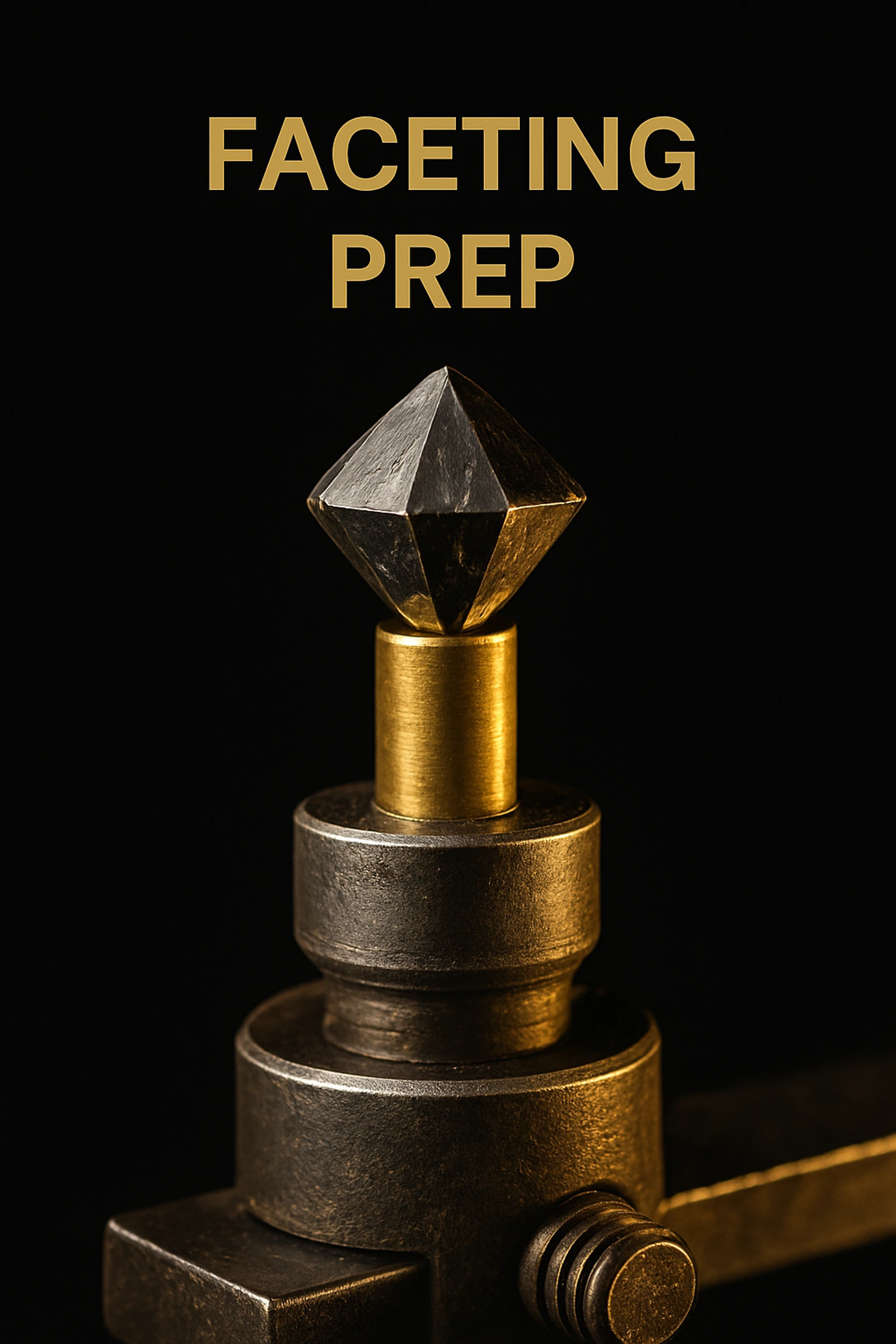
Preparing the rough diamond for faceting
The Cutting Process
Planning & Mapping
Before any cutting begins, experts analyze the rough diamond using advanced scanning technology. They map every inclusion, study the crystal structure, and use specialized software to determine how to achieve maximum beauty and carat retention. This planning phase can take days for large or complex stones.
Laser Cutting
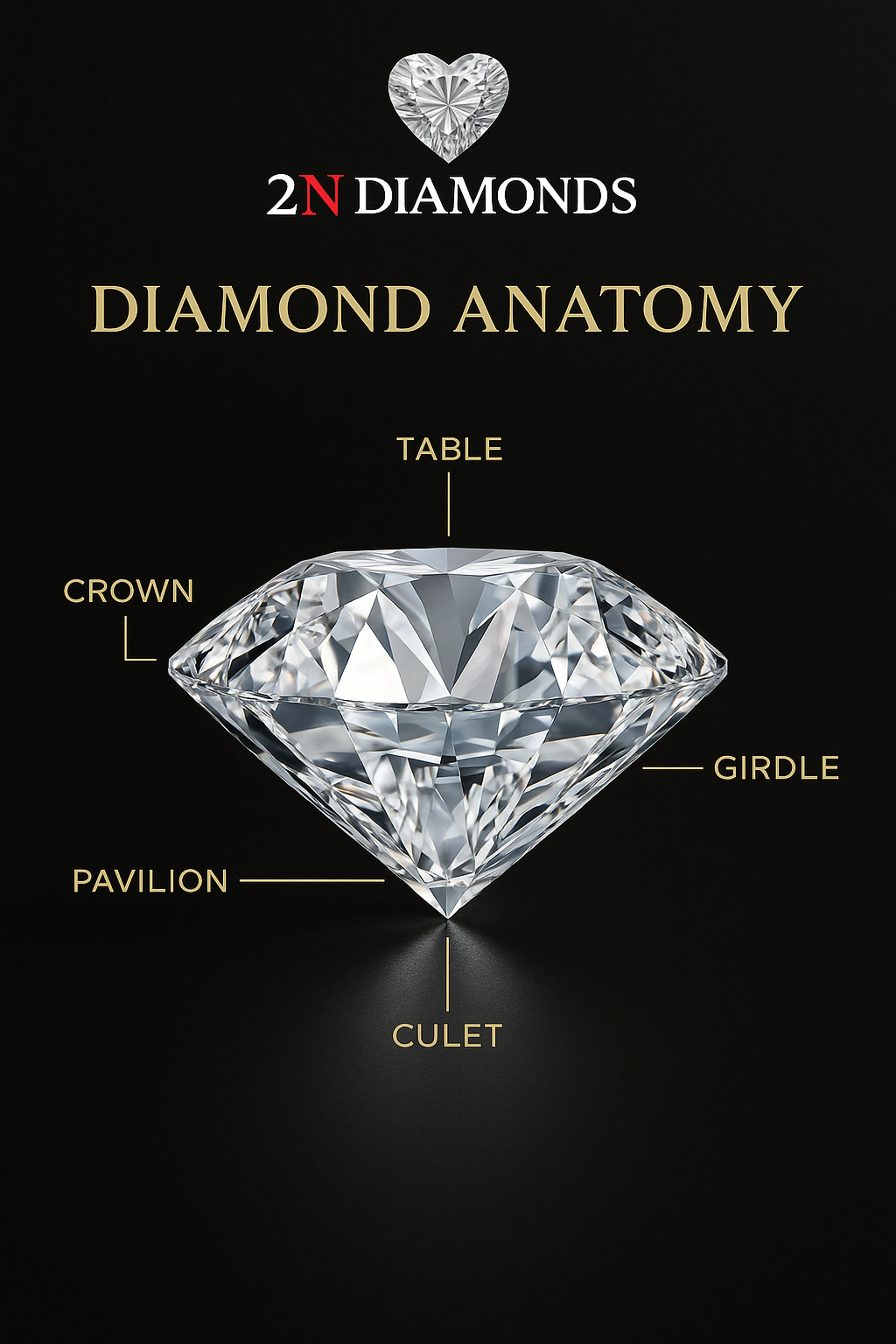
Modern diamond cutting uses precision lasers to divide rough diamonds along predetermined planes. The laser can cut through diamond—the hardest natural material—with microscopic accuracy. This technology replaced traditional cleaving, which relied on finding natural cleavage planes and carried risk of shattering the stone.
Bruting (Girdling)
For round diamonds, two diamonds are mounted on spinning axles and pressed against each other to create the circular outline. This process, called bruting, forms the girdle—the widest part of the diamond. Only diamond can effectively shape diamond, due to its unmatched hardness.
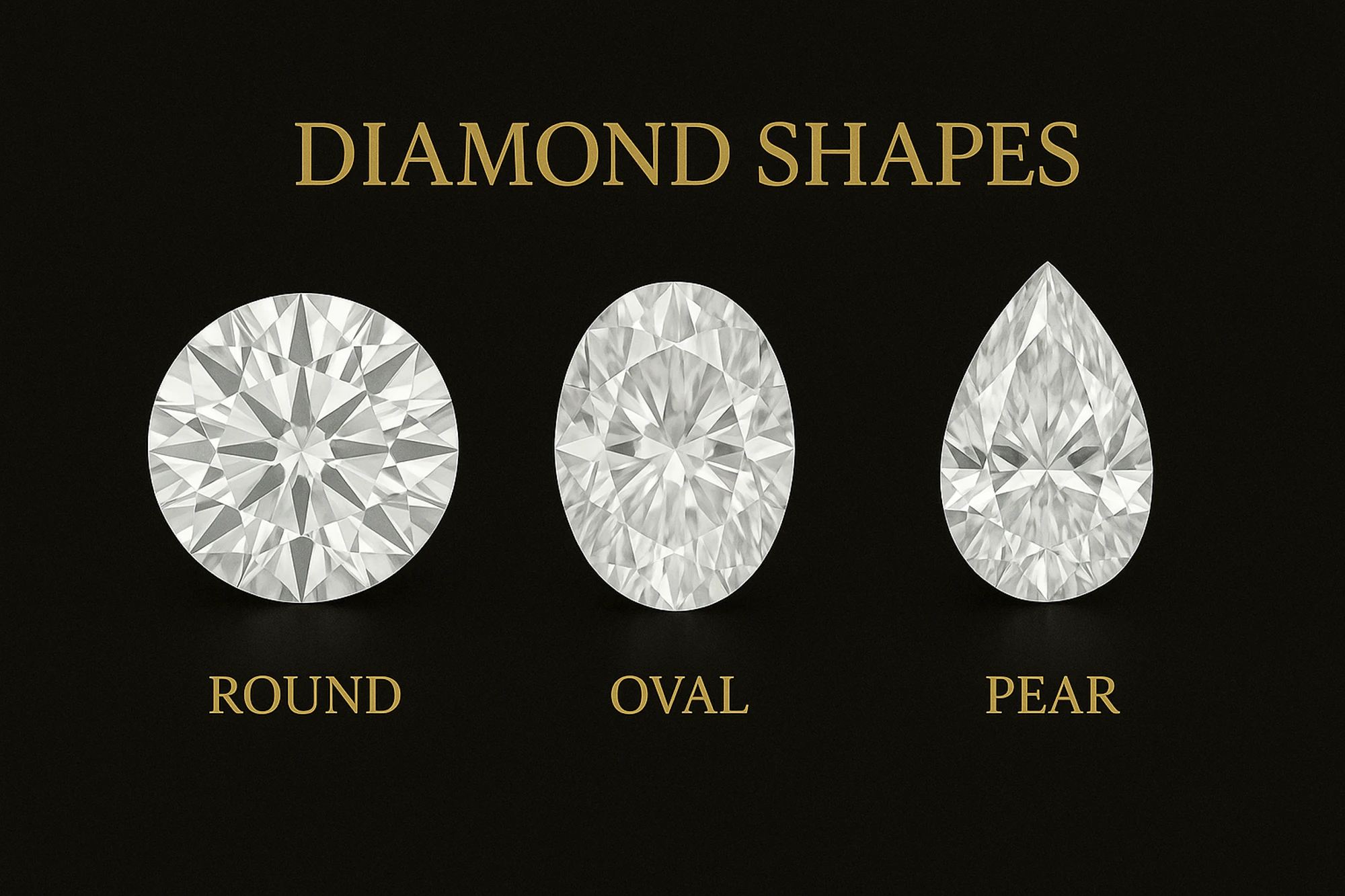
Faceting
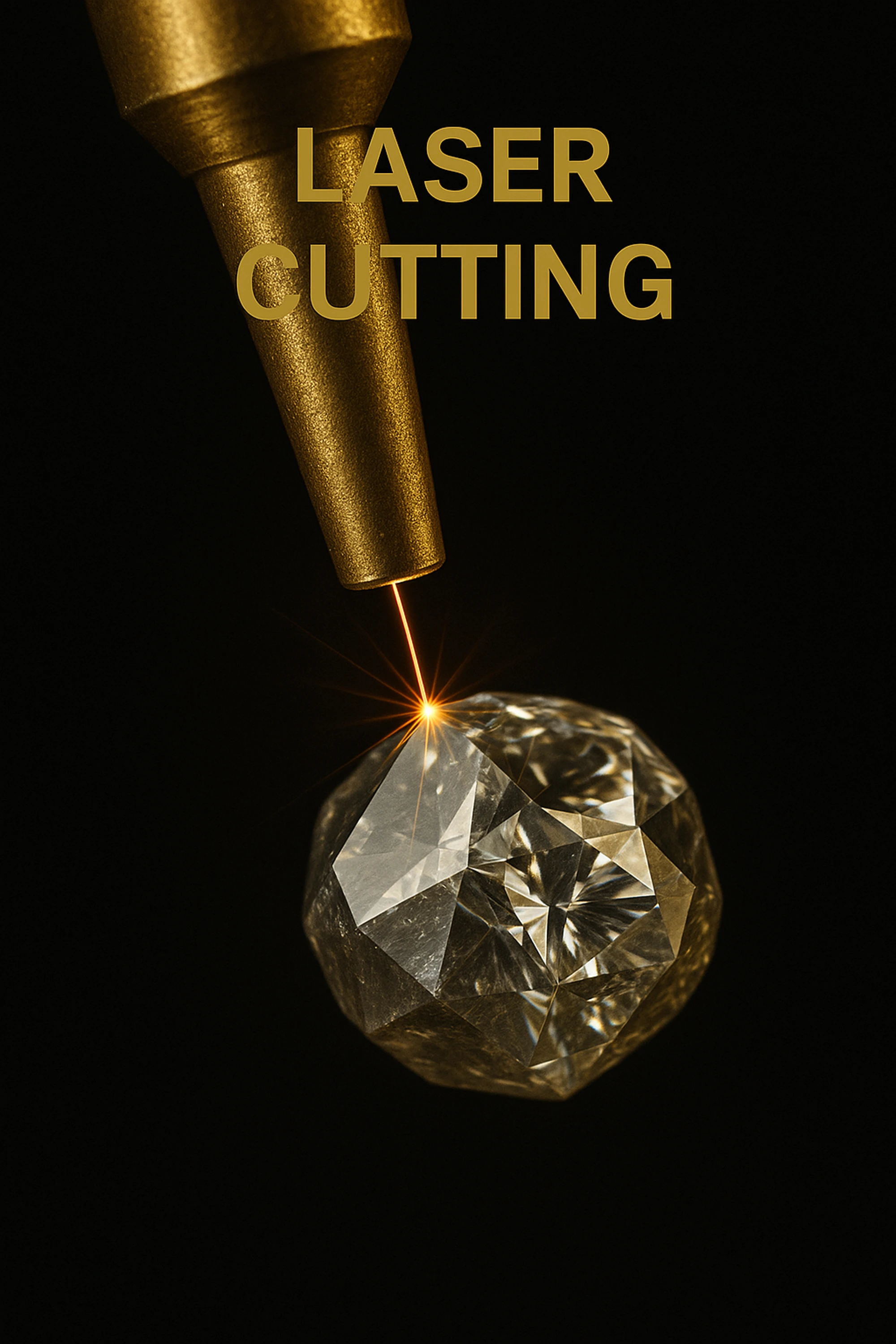
The most critical phase. Master cutters create each facet by holding the diamond against a spinning wheel coated with diamond dust. A round brilliant has 57-58 facets, each cut at precise angles. The table, crown facets, pavilion facets, and culet must all align perfectly for optimal light performance.
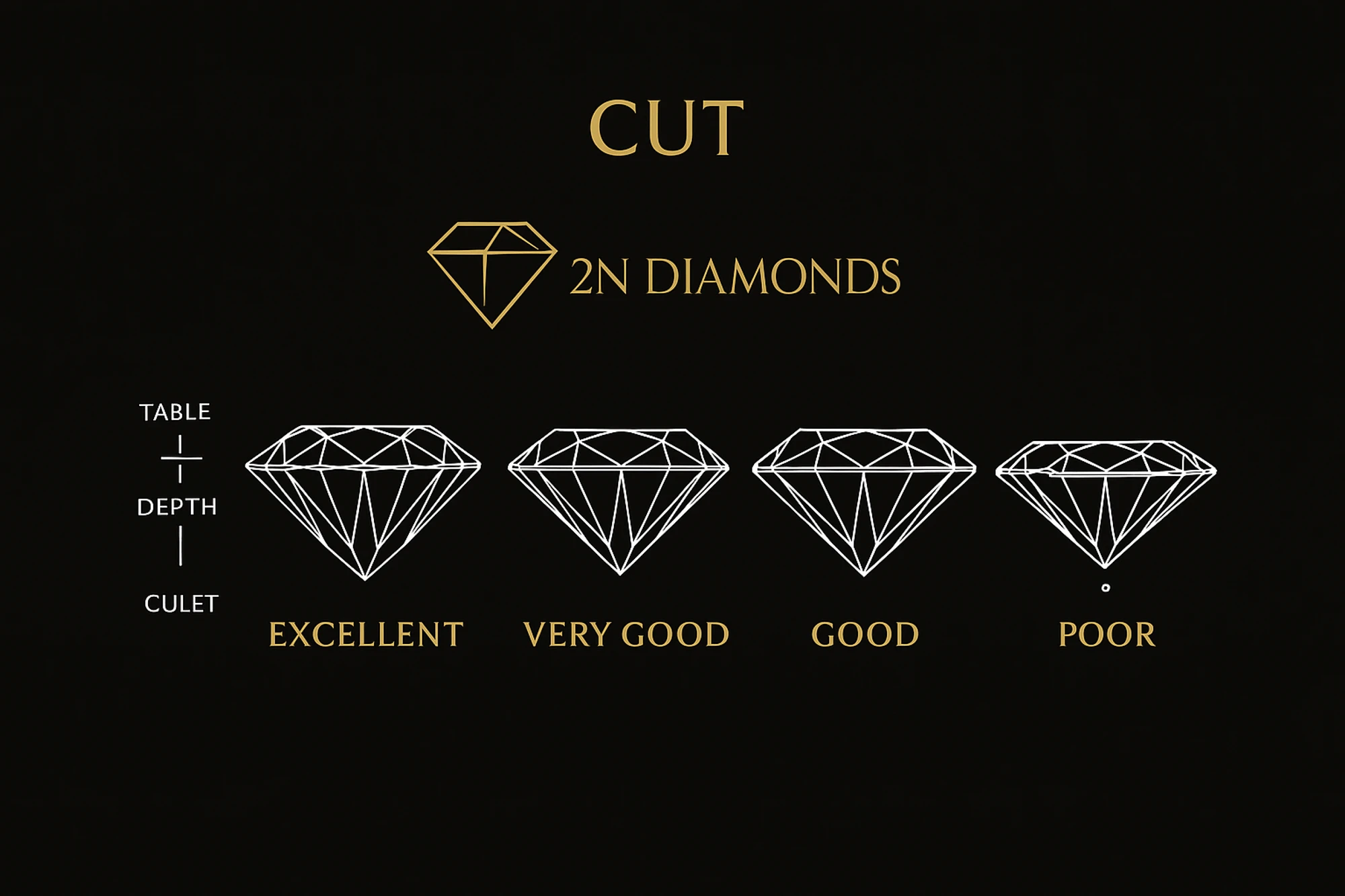
Final Polishing
Each facet is polished to a mirror-like finish using progressively finer diamond powder. This removes any microscopic scratches from cutting and ensures maximum light transmission. The polishing phase can take as long as the cutting itself for stones requiring exceptional finish.
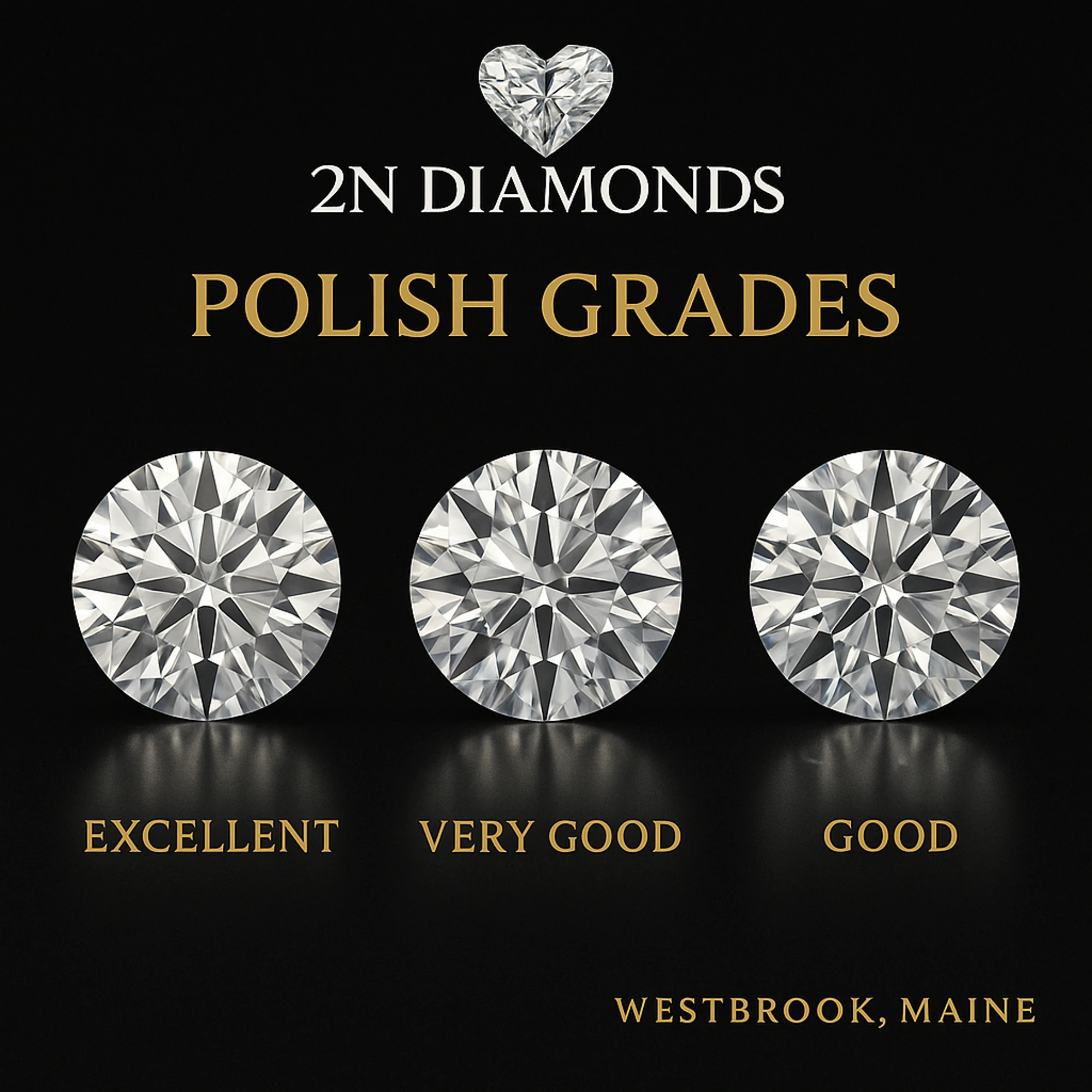
The Transformation
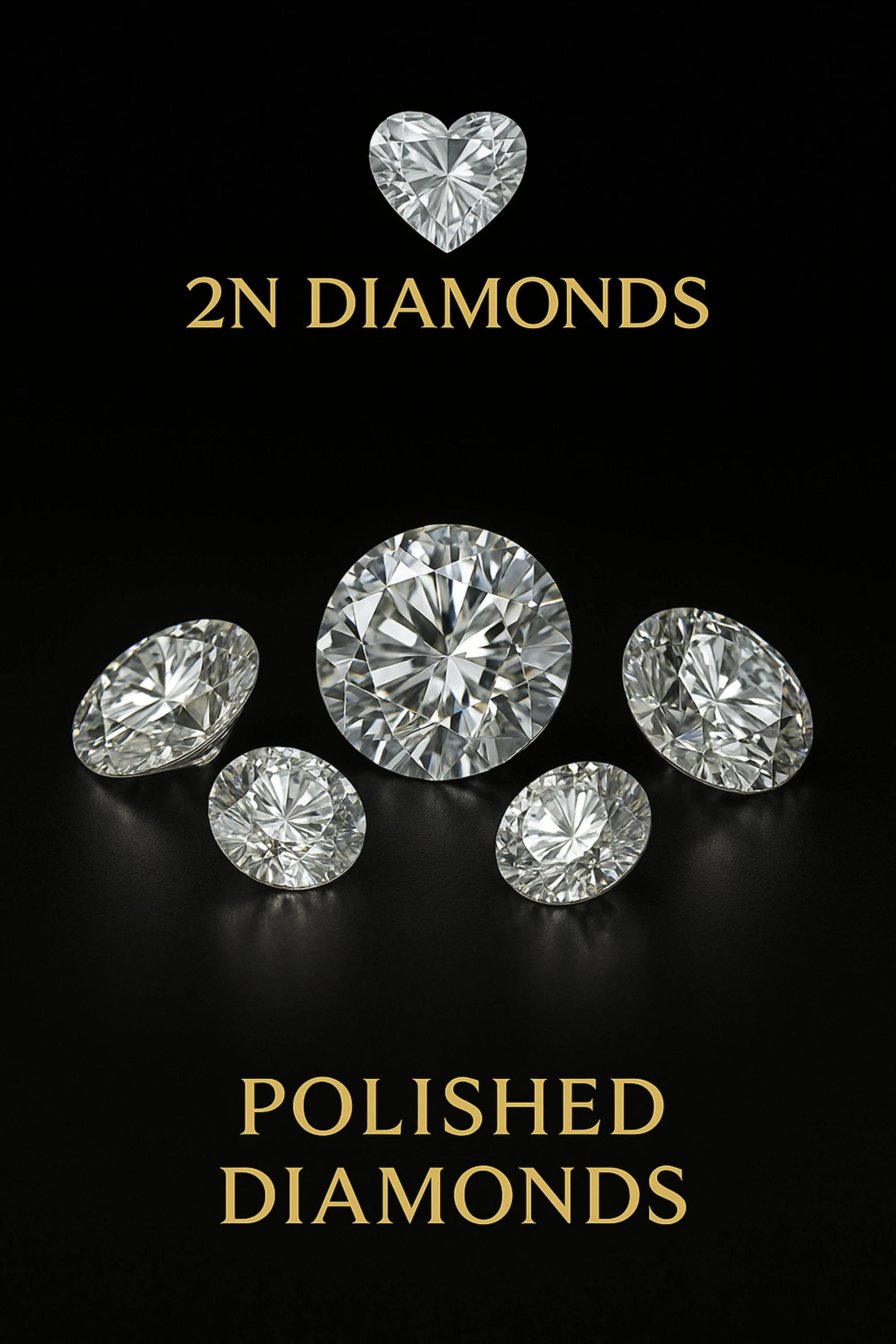
Finished diamonds ready for certification
The transformation from rough crystal to finished diamond is remarkable. What began as an unremarkable-looking stone now displays brilliant flashes of white light, rainbow fire, and dancing scintillation.
Throughout the process, 40-60% of the rough diamond's weight is lost to achieve optimal proportions. This sacrifice of carat weight for beauty is what separates excellent cuts from mediocre ones—and why well-cut diamonds command premium prices.
After cutting, each diamond is cleaned, examined for quality, and sent to IGI for independent certification. Only then does it earn its place in our vault.
The Finished Masterpiece
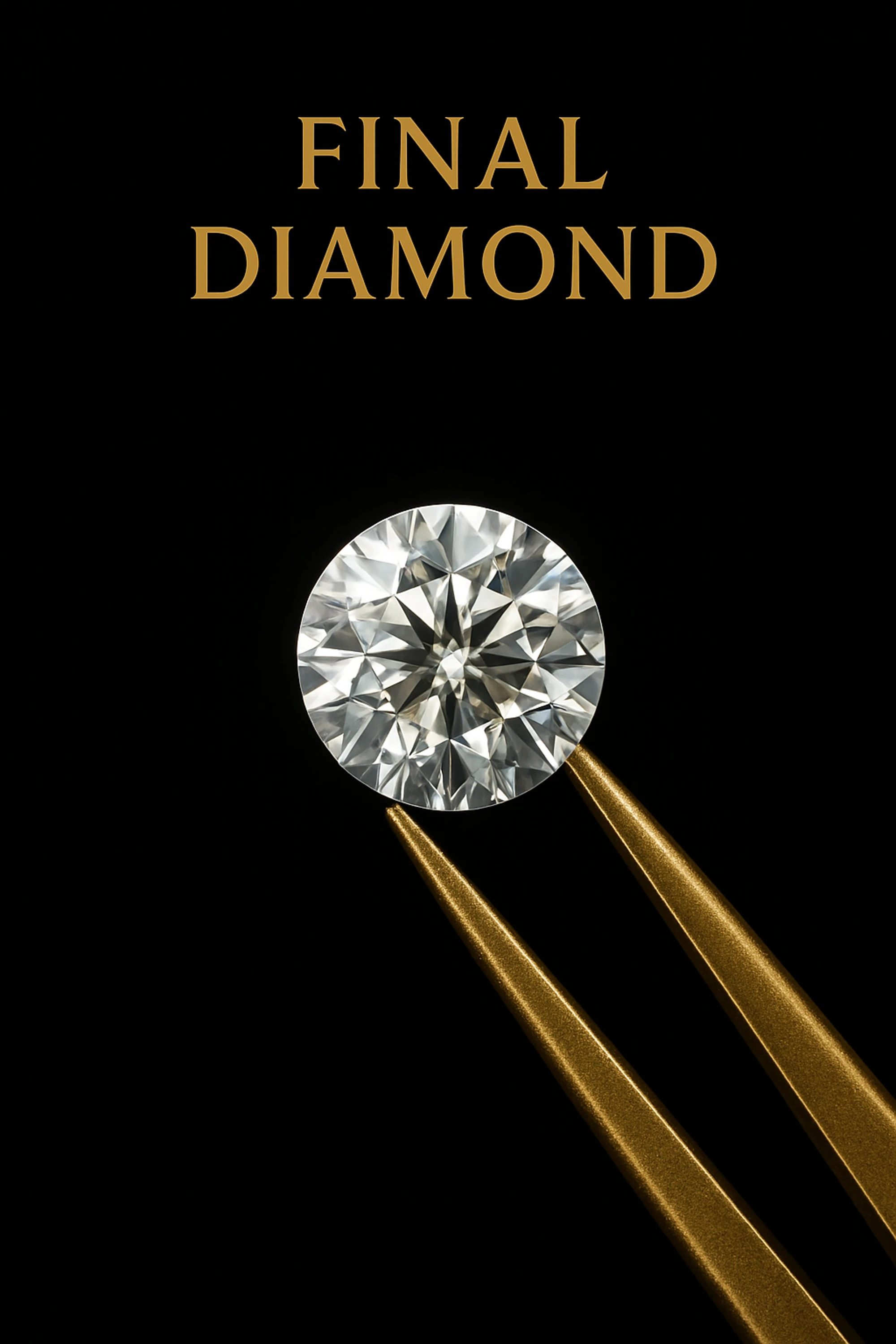
A finished diamond — weeks of craftsmanship in a single stone
The Mark of Excellence
The finest round brilliant diamonds display a phenomenon called Hearts & Arrows—a pattern visible through a special viewer that indicates perfect symmetry and proportions.
Achieving this pattern requires cutting each of the 57 facets to within fractions of a degree of ideal angles, with perfect alignment between opposing facets. It's the diamond cutter's equivalent of a masterpiece.
Our Ideal cut diamonds often display Hearts & Arrows patterns—a testament to the skill of the master cutters who shape them.
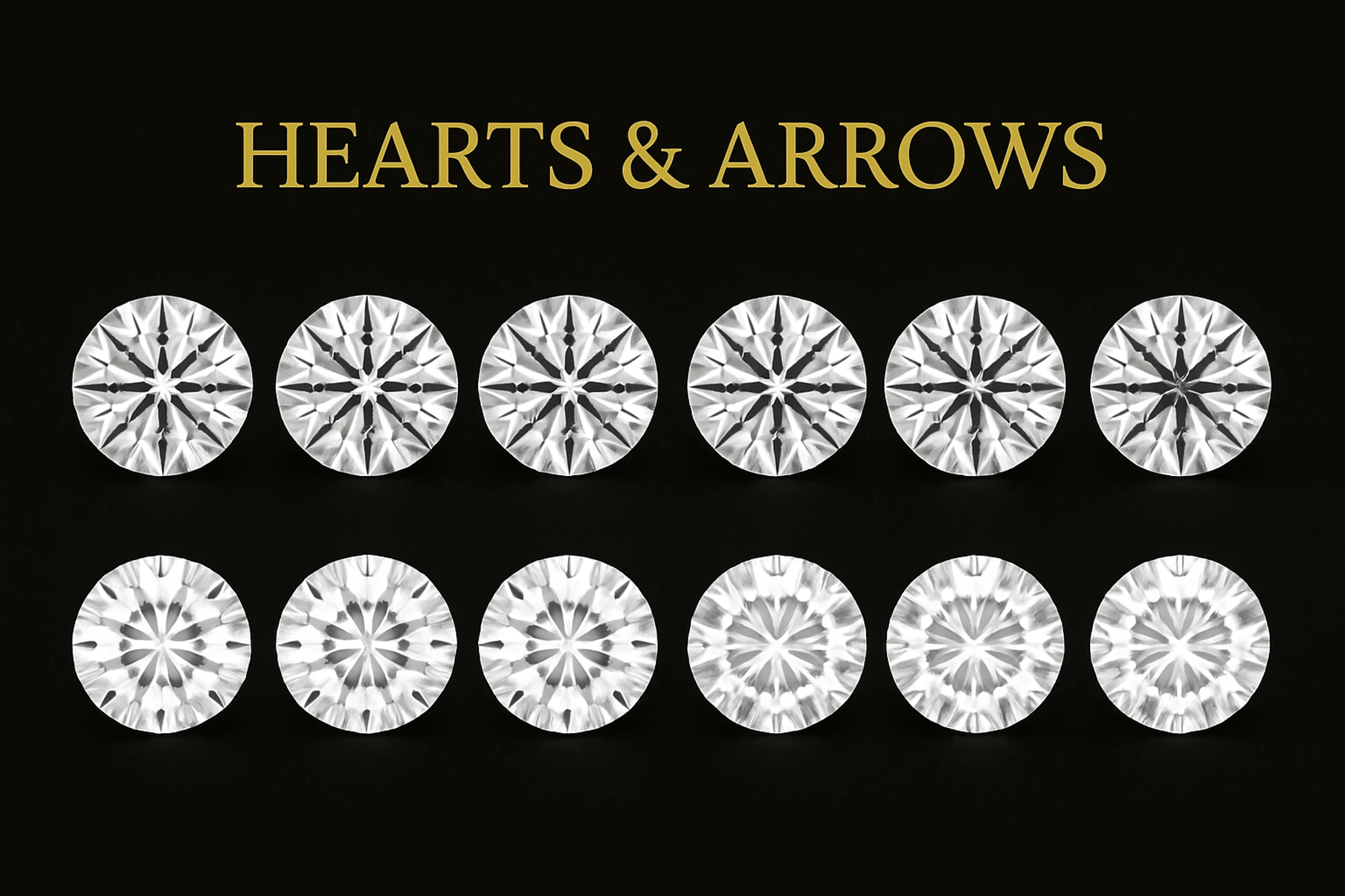
Hearts & Arrows — The pinnacle of cutting precision
Symmetry & Polish Grades
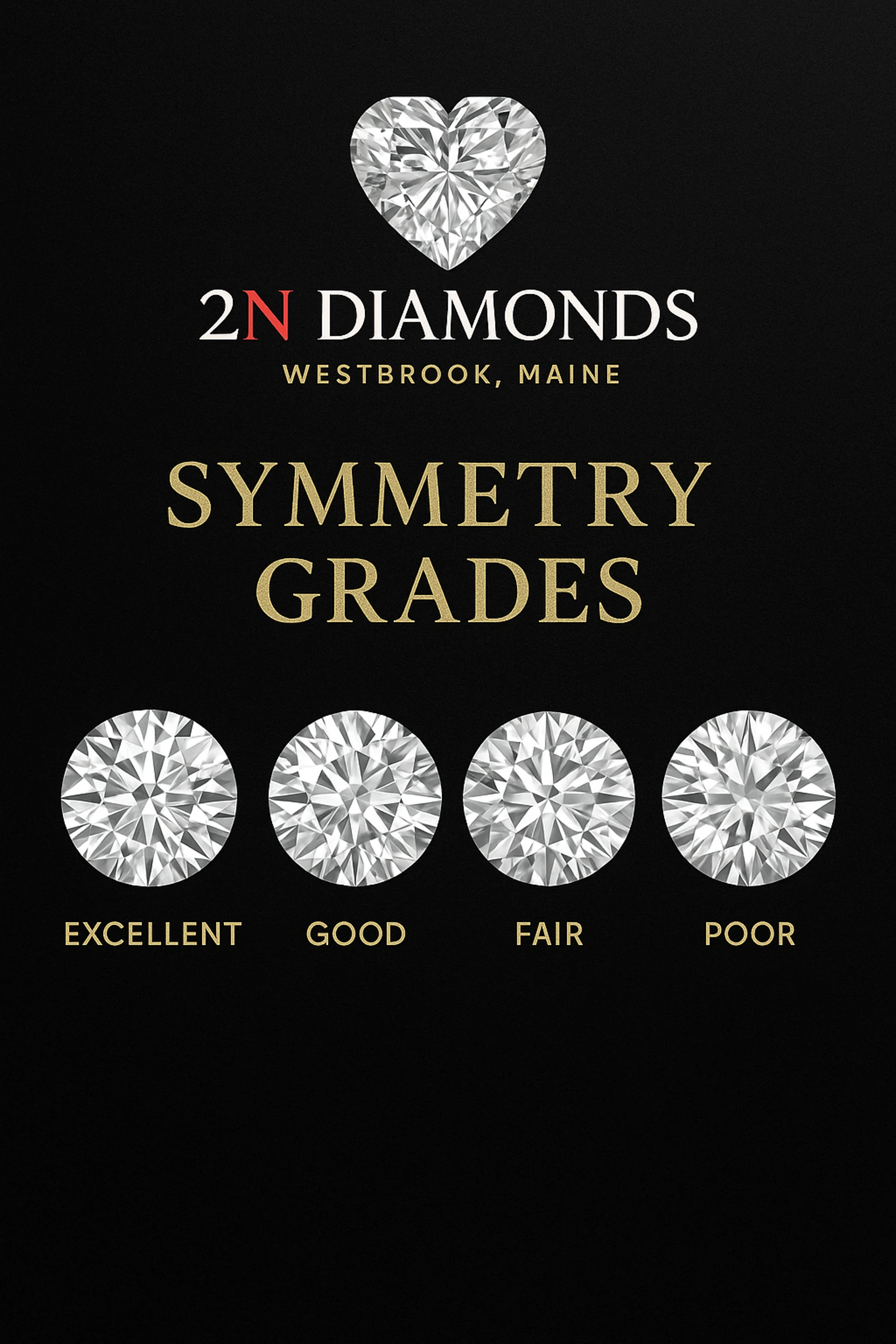
How symmetry affects light performance
Beyond the overall cut grade, IGI evaluates two specific aspects of craftsmanship:
Symmetry: How well facets align and mirror each other. Poor symmetry can misdirect light, reducing brilliance.
Polish: The smoothness of each facet surface. Microscopic polish marks can interfere with light transmission.
Both are graded Excellent, Very Good, Good, Fair, or Poor. For maximum beauty, we recommend at least Very Good for both, with Excellent being ideal.
At 2N Diamonds, our standards ensure every diamond meets strict symmetry and polish requirements—no exceptions.
Laser Inscription
After certification, each diamond receives a laser inscription on its girdle—a microscopic engraving of the IGI report number that serves as a permanent identifier.
This inscription is invisible to the naked eye but can be viewed with 10x magnification. It provides:
• Verification: Match the diamond to its certificate
• Security: Proof of ownership if lost or stolen
• Authenticity: Confirmation of IGI certification
Where a stone is inscribed, its IGI report says so, and every stone, inscribed or not, is photographed in Quality Control before it leaves New York.
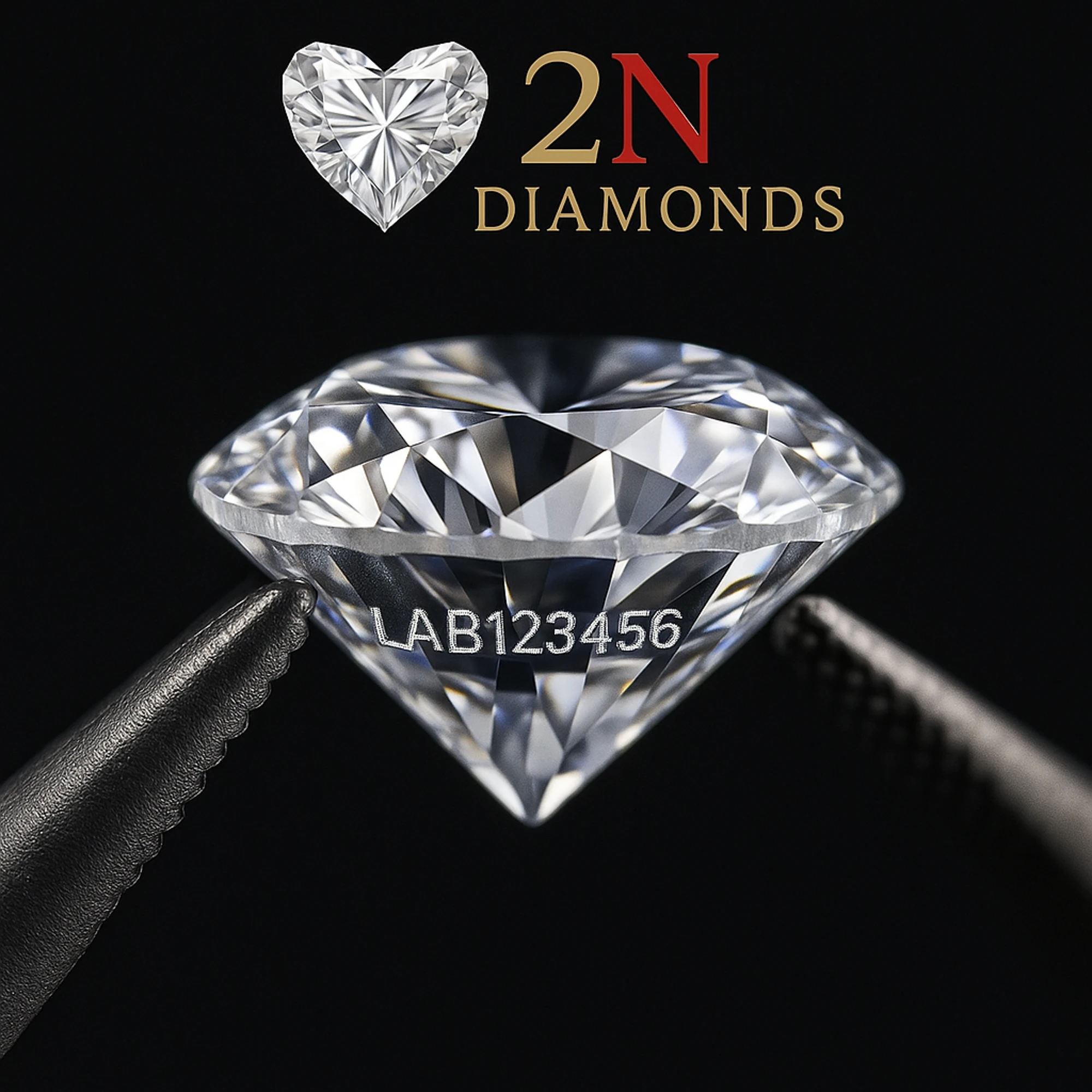
IGI report number laser-inscribed on the girdle
Certified Excellence
After cutting and polishing, every diamond is submitted to IGI for independent certification. Learn what's in your diamond certificate and why it matters.
Learn About IGI Certification →See Master Craftsmanship
Every diamond in our vault represents weeks of expert craftsmanship. Browse our collection of Ideal and Excellent cut diamonds.
Explore Our Diamonds