Carat Weight
Understanding how diamonds are measured — and how to own more carat for far less
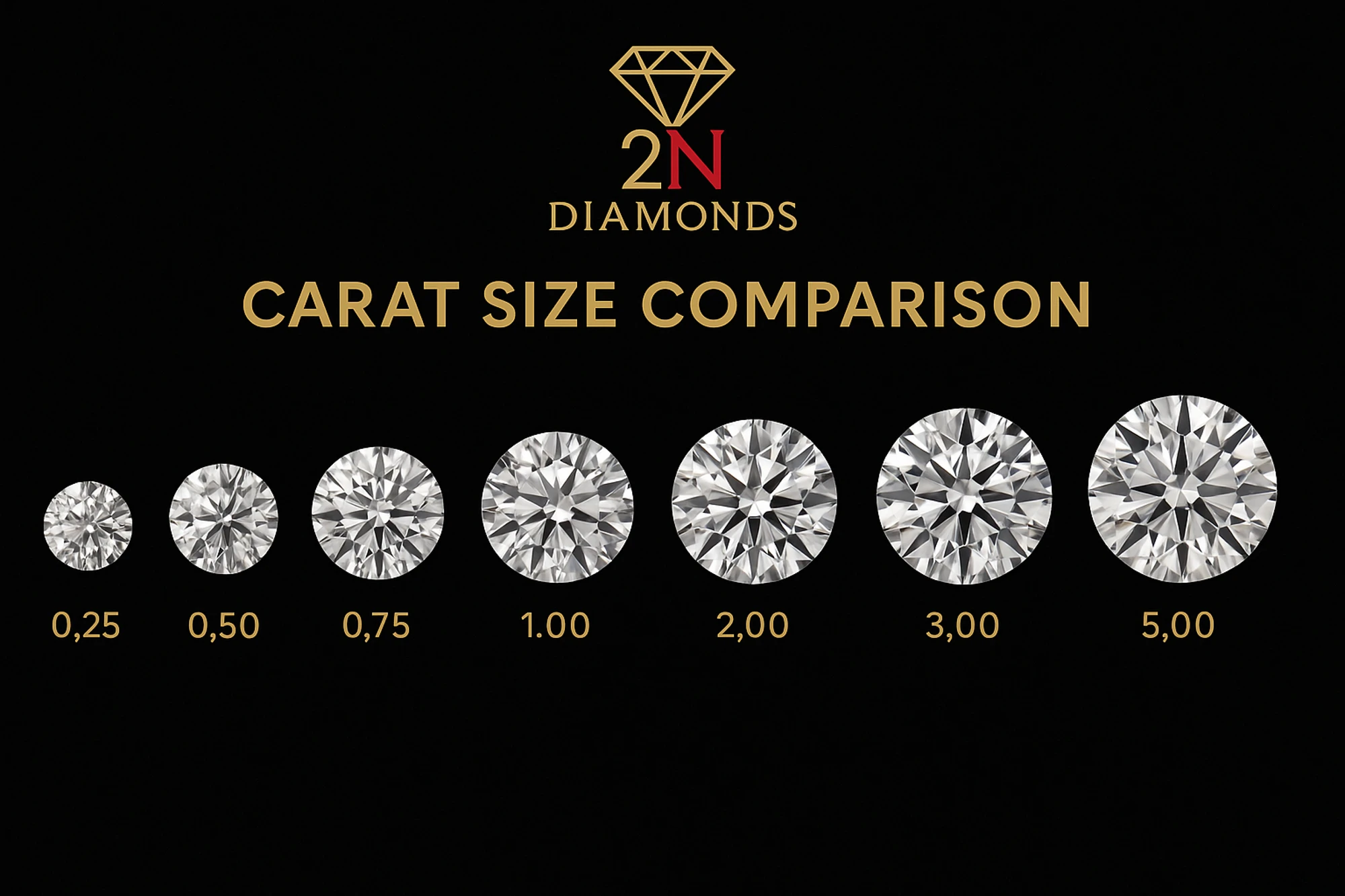
Visual comparison of diamond carat weights on a finger
What is a Carat?
Carat is the standard unit of weight for diamonds and gemstones. One carat equals exactly 200 milligrams (0.2 grams, or about 0.007 ounces).
The word "carat" comes from the carob seed. Ancient gem traders used these seeds as counterweights on balance scales because of their remarkably uniform weight—each seed weighs almost exactly 0.2 grams.
Important distinction: Carat (ct) measures diamond weight, while karat (K) measures gold purity. A "24K gold ring with a 2ct diamond" uses both terms correctly.
Carat weight is often expressed in points, where 1 carat = 100 points. A 0.75ct diamond is called a "75-pointer" or "three-quarter carat."
Carat is where buying smart pays off the most. Because our lab grown diamonds are priced at least 45% below boutique, the same budget can carry you a full grade or more in size — the two-carat moment instead of the one. Over 20 years of wholesale buying taught us where size delivers real presence, and now that knowledge is yours.
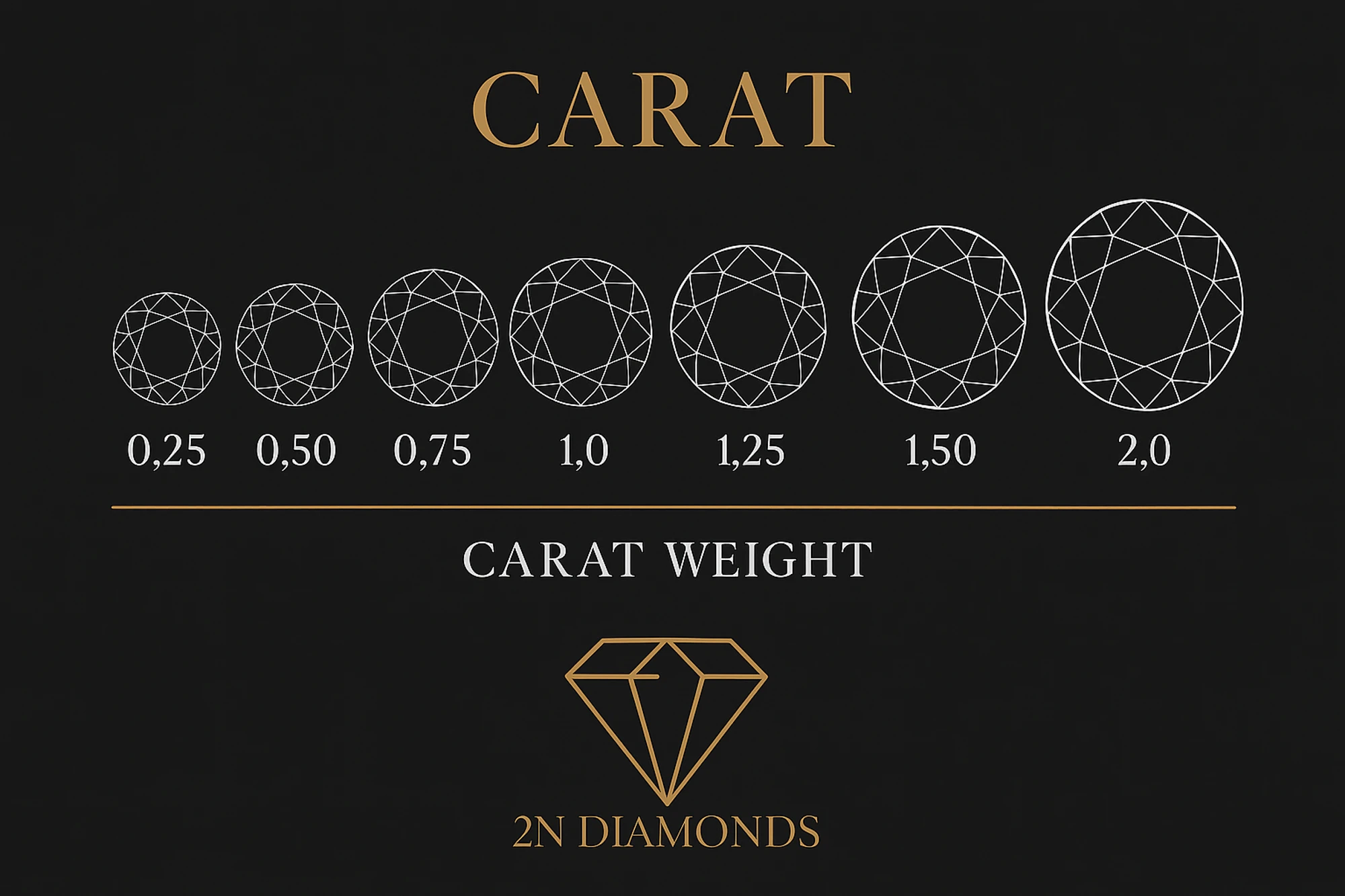
Carat weight progression chart
Size vs. Weight: Not Always the Same
While carat measures weight, what we see is size—and these don't always correlate perfectly. Two diamonds of equal carat weight can appear different sizes depending on:
• Cut proportions: A deeper cut hides weight in the pavilion, making the
diamond face up smaller. A shallower cut spreads weight across the table, appearing larger.
• Shape: Elongated shapes (Oval, Marquise, Pear) appear larger than rounds
of the same weight because they cover more finger area.
• Table size: A larger table percentage creates a bigger "window" into the diamond.
Pro tip: If you want maximum visual impact, consider an Oval or Marquise shape— they typically appear 10-15% larger than a round of the same carat weight.
Why Prices Jump at Certain Weights
Diamond prices don't increase linearly with carat weight—they jump at "magic numbers" like 0.50ct, 1.00ct, 1.50ct, and 2.00ct. Why? These are psychological thresholds that buyers seek, creating higher demand.
A 1.00ct diamond costs significantly more than a 0.95ct diamond, even though the visual difference is imperceptible. Smart buyers can find exceptional value by choosing weights just below these thresholds.
Value strategy: Consider these "sweet spot" weights:
• 0.90-0.99ct instead of 1.00ct
• 1.40-1.49ct instead of 1.50ct
• 1.90-1.99ct instead of 2.00ct
You'll save significantly while getting a diamond that looks virtually identical to the higher-priced weight.
Price Multipliers
*Approximate multipliers for equivalent quality
How Shapes Affect Perceived Size
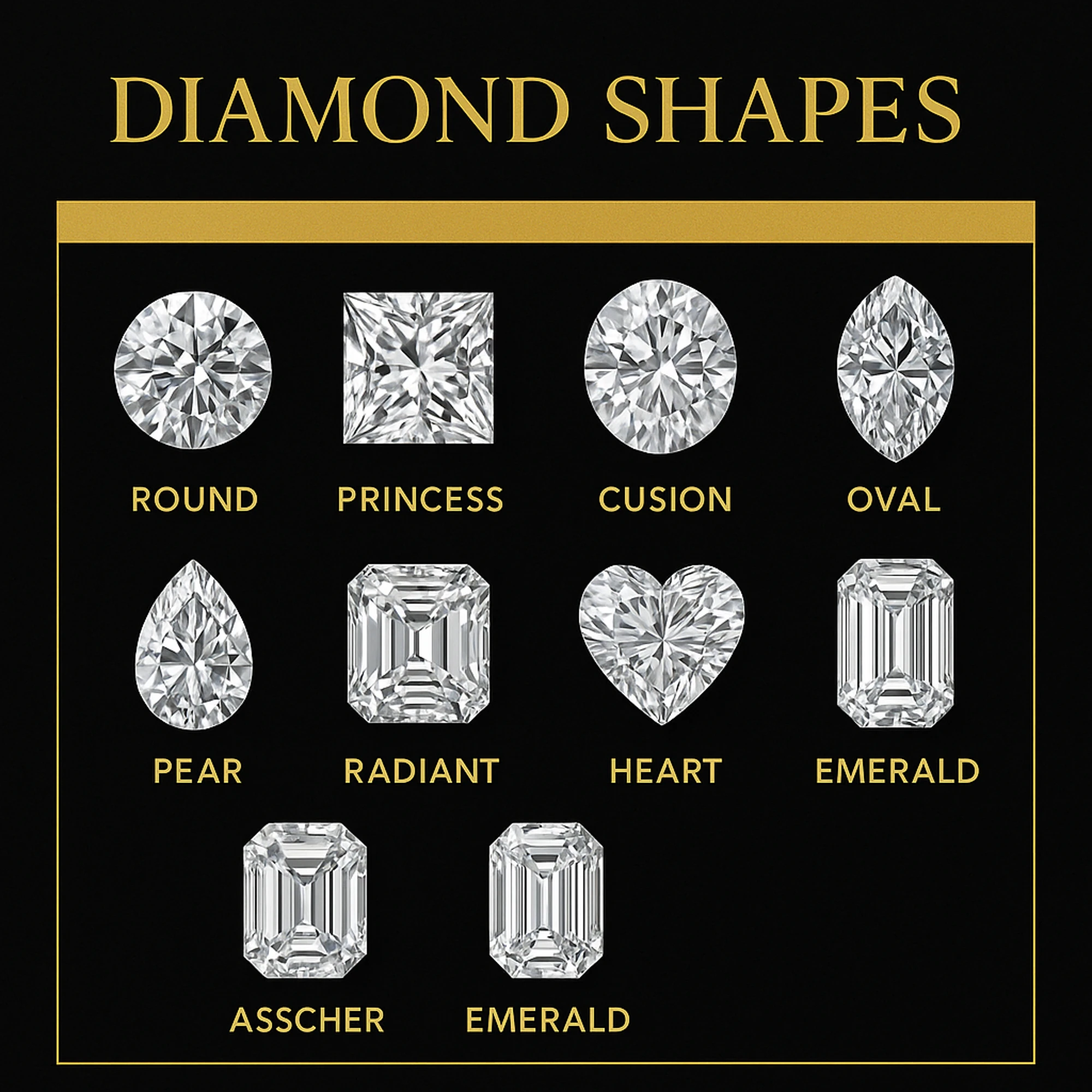
Different shapes at the same carat weight
Not all 1-carat diamonds look the same size. Shape dramatically affects how large a diamond appears on the finger.
Shapes that appear larger:
• Marquise: Appears largest due to elongated form
• Pear: Elongated with elegant taper
• Oval: Popular for its flattering, larger appearance
• Emerald: Large table showcases size
Shapes that appear smaller:
• Asscher: Square with deep pavilion
• Cushion: Rounded corners reduce spread
• Princess: Depth can hide weight
Round Brilliant falls in the middle—the most popular shape balances size with optimal light performance.
Round Diamond Size Reference
*Measurements assume ideal cut proportions. Actual dimensions vary by cut quality.
The 2N Diamonds Range
We offer lab grown diamonds from 1.00 to 10.00 carats in precise 0.25-carat increments. Our focus on larger stones (1ct+) allows us to deliver exceptional value where it matters most—impressive, statement-making diamonds.
Whether you're seeking a classic 1-carat solitaire or a show-stopping 5-carat centerpiece, our vault has options at every size. And because our diamonds are lab grown, you can achieve carat weights that would be prohibitively expensive in natural diamonds.
Our Recommendation
Prioritize cut over carat. A well-cut 1.5ct diamond will be more beautiful than a poorly-cut 2ct diamond. The sparkle and brilliance from an excellent cut make any size look stunning.
If maximum size is your goal, consider these strategies:
• Choose elongated shapes (Oval, Pear, Marquise) for more finger coverage
• Look for diamonds just under magic numbers (0.95ct vs 1.00ct)
• Consider lab grown diamonds—achieve 2x the carat weight at similar prices
Find Your Perfect Size
Filter our vault by carat weight to find diamonds that match your vision. From everyday elegance to extraordinary luxury, we have the perfect size waiting for you.
Explore Our Diamonds