Diamond Fluorescence
Understanding the glow under UV light — the misunderstood detail that can earn you a better price
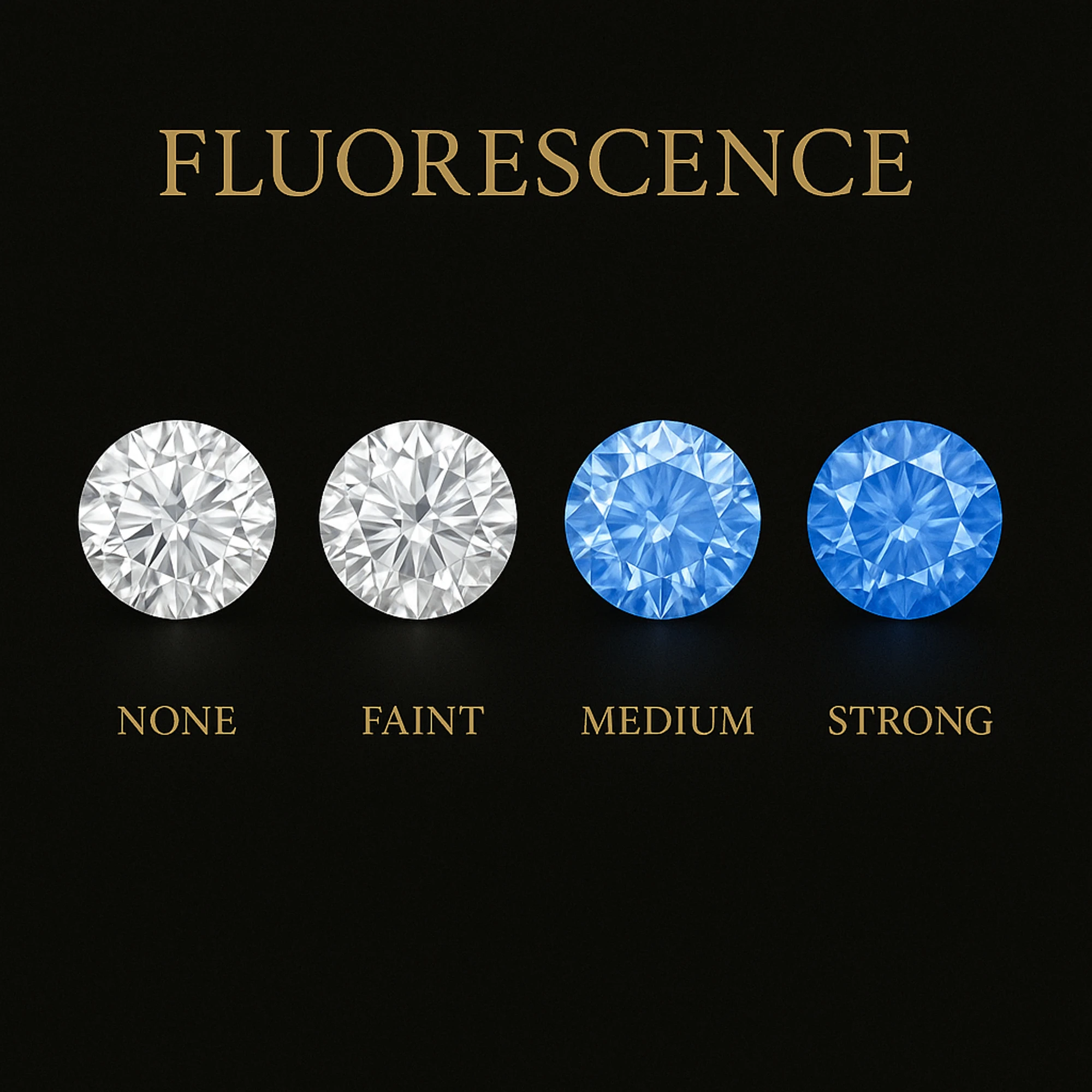
Diamonds displaying various fluorescence colors under UV light
What is Fluorescence?
Fluorescence is the visible light some diamonds emit when exposed to ultraviolet (UV) rays. About 25-35% of diamonds exhibit some degree of fluorescence, most commonly appearing as a blue glow.
This phenomenon occurs when UV light excites certain atoms within the diamond's crystal structure—typically nitrogen—causing them to emit visible light. The effect is immediate and stops as soon as the UV source is removed.
Fluorescence is a natural characteristic, not a defect. It's simply another way diamonds interact with light, and it's graded on IGI certificates from None to Very Strong.
Here is where knowledge pays: most buyers reflexively avoid fluorescence, so stones that carry it are often priced lower — even when they look beautiful, or in some cases whiter, to the eye. Over 20 years of wholesale buying taught us to judge each diamond on how it actually looks, not on a line in a report. Knowing this is one more way our diamonds reach you at least 45% below boutique.
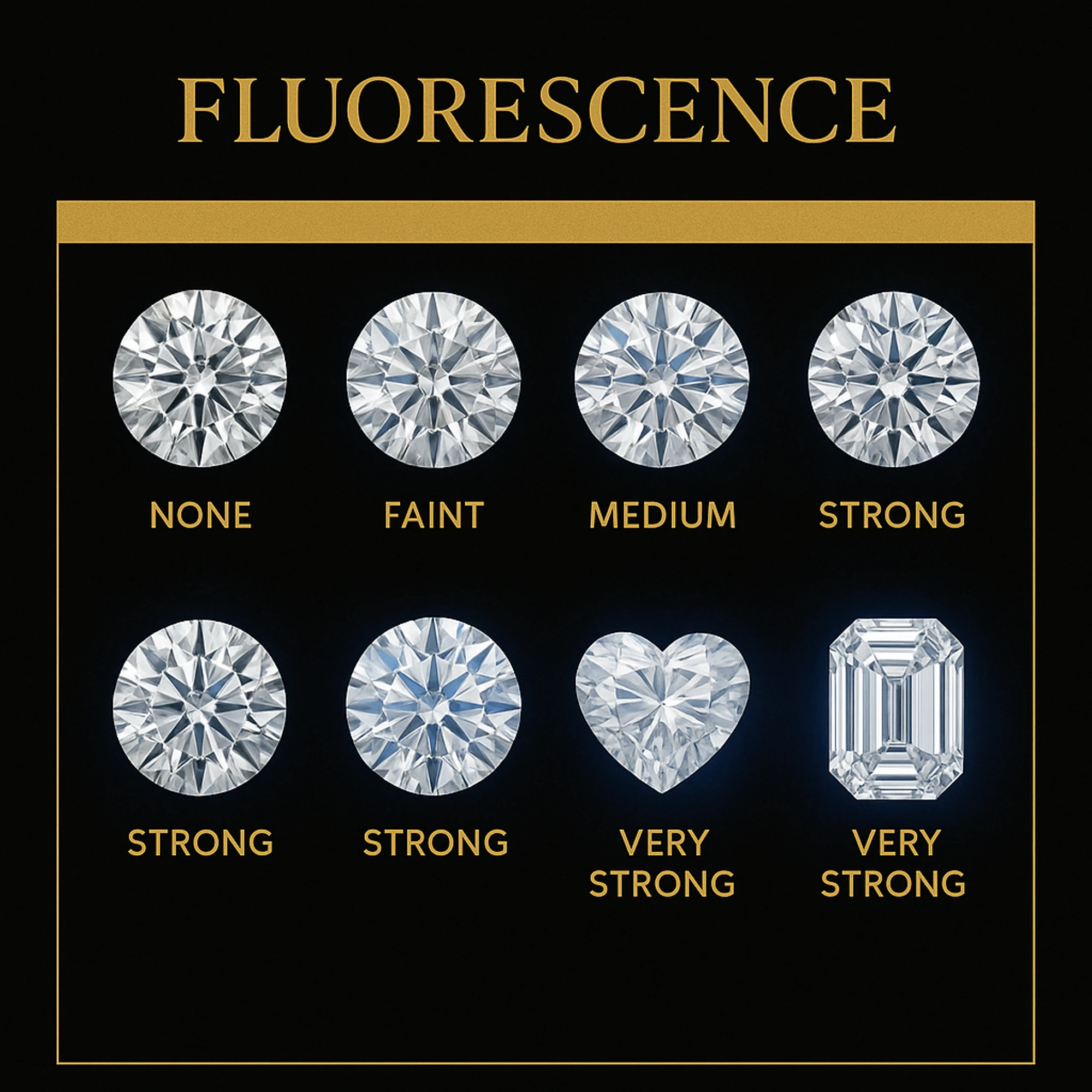
The same diamonds under normal light (top) and UV light (bottom)
The Fluorescence Scale
The most common fluorescence color is blue, but diamonds can also fluoresce yellow, green, orange, or white in rare cases.
How Fluorescence Affects Appearance
In most cases, fluorescence has no visible effect on how a diamond looks in normal lighting conditions. The sun does emit some UV light, but not enough to trigger noticeable fluorescence in most diamonds.
However, in certain situations:
Potential benefits:
• Blue fluorescence can make a slightly yellow diamond (J-M color) appear whiter
• Some people enjoy the unique "glow" effect under UV environments
• Fluorescent diamonds often cost less, offering better value
Potential concerns:
• Very Strong fluorescence can occasionally make a diamond appear hazy or "oily"
• This occurs in a small percentage of strongly fluorescent diamonds
• High-color diamonds (D-F) with strong fluorescence may appear less crisp
The UV Effect
You'll notice fluorescence most prominently in:
• Nightclubs with black lights
• Some concert venues
• Certain museum displays
• UV sterilization areas
• Direct, intense sunlight (subtle)
In normal indoor lighting or soft daylight, fluorescence is typically invisible.
The Science Behind the Glow
Fluorescence occurs due to the presence of certain trace elements in the diamond's crystal lattice. When UV light hits these atoms, their electrons absorb energy and jump to a higher energy state. As they return to their normal state, they release this energy as visible light.
Blue fluorescence (most common) is typically caused by nitrogen atoms arranged in specific patterns within the crystal structure. Different arrangements and concentrations produce different fluorescence intensities.
Other colors result from different trace elements or structural features. Yellow and green fluorescence are caused by different nitrogen configurations, while orange can result from the presence of certain defects in the crystal lattice.
Lab grown diamonds can exhibit fluorescence just like natural diamonds, depending on the growth conditions and any post-growth treatments applied.
Fluorescence & Value
Higher Color (D-F)
Strong fluorescence can slightly reduce value in colorless diamonds, as some buyers perceive it may affect the stone's "iciness." However, many experts consider this concern overblown.
Lower Color (G-J)
Blue fluorescence can actually enhance appearance in near-colorless diamonds by making them appear whiter. This can be a smart value play.
Medium Fluorescence
Often considered the "sweet spot"—enough to potentially enhance color without risk of haziness. Offers excellent value with minimal visual impact.
None Fluorescence
Commands a premium in the market, especially for high-color diamonds. Preferred by those who want absolute consistency in appearance.
Our Recommendation
Don't automatically avoid fluorescent diamonds. For most people, fluorescence has no negative impact on a diamond's beauty—and it can offer significant value advantages.
Our guidelines:
• D-F color: Consider None to Medium fluorescence
• G-H color: Any fluorescence level is fine; Medium Blue can enhance appearance
• I-J color: Medium to Strong Blue can make the diamond appear whiter
If you're concerned about potential haziness with Strong or Very Strong fluorescence, request video of the specific diamond to evaluate its appearance, or contact our concierge team for guidance.
Explore All Options
Every diamond in our vault displays its fluorescence grade. Filter by this characteristic to find diamonds that match your preferences—or contact us for personalized guidance.
Explore Our Diamonds