How Diamonds Are Made
The science and artistry behind a real diamond — and the reason it costs a fraction of a mined one

Inside a CVD diamond growth chamber — where science meets nature
Real Diamonds, Grown Differently
Lab grown diamonds are real diamonds—chemically, physically, and optically identical to mined diamonds. The only difference is their origin: instead of forming over billions of years deep in the Earth, they're created in weeks using advanced technology that replicates nature's process.
Every lab grown diamond starts with a tiny diamond seed—a thin slice of existing diamond. Using either CVD or HPHT methods, carbon atoms are deposited layer by layer onto this seed, growing a full diamond crystal.
The result is a diamond with the same crystal structure, hardness (10 on Mohs scale), refractive index, and brilliance as any diamond from the earth. Even expert gemologists cannot distinguish them without specialized equipment.
Once you understand this, the value becomes obvious. You are not buying an imitation — you are buying the same diamond without the markup that scarcity and mining add. For over 20 years our buyers graded stones at the wholesale level, and we apply the same scrutiny here: only IGI-certified diamonds that pass our strict tests reach you, at prices at least 45% below boutique.

A diamond seed — the foundation for growth
Two Methods of Creation

HPHT vs CVD — Two paths to the same beautiful result
HPHT Method
High Pressure High Temperature mimics the conditions deep within Earth's mantle where natural diamonds form.
• Pressure: ~1.5 million PSI
• Temperature: ~2,700°F (1,500°C)
• Growth time: Days to weeks
• Best for: Colorless to near-colorless
• Result: Exceptional clarity and color
A carbon source dissolves in molten metal, then crystallizes on the diamond seed under extreme pressure.
CVD Method
Chemical Vapor Deposition grows diamonds from a carbon-rich gas in a vacuum chamber.
• Pressure: Near vacuum
• Temperature: ~1,500°F (800°C)
• Growth time: 2-4 weeks
• Best for: Large, high-quality stones
• Result: Exceptional purity
Hydrogen and methane gases are ionized into plasma, depositing carbon atoms onto the seed layer by layer.
The Growth Process
Diamond Seed Preparation
The process begins with a thin slice of existing diamond, typically a Type IIa diamond known for exceptional purity. This seed is polished to atomic smoothness and placed in the growth chamber. The quality of this seed influences the final diamond's properties.
Chamber Preparation
For CVD, the chamber is evacuated to remove all air and contaminants, then filled with precise mixtures of hydrogen and methane. For HPHT, the seed is placed with a carbon source inside a massive press capable of generating millions of pounds of pressure.

Diamond Growth
Over 2-4 weeks, carbon atoms attach to the seed one layer at a time. In CVD, microwave energy creates plasma that breaks apart gas molecules, releasing carbon. In HPHT, extreme conditions cause carbon to crystallize. The diamond grows at roughly 0.1-0.3mm per day.

Rough Diamond Extraction
Once growth is complete, the rough diamond is carefully removed from the chamber. At this stage, it doesn't look like the sparkling gem you imagine—it's a rough, often cloudy crystal that requires expert cutting and polishing to reveal its beauty.
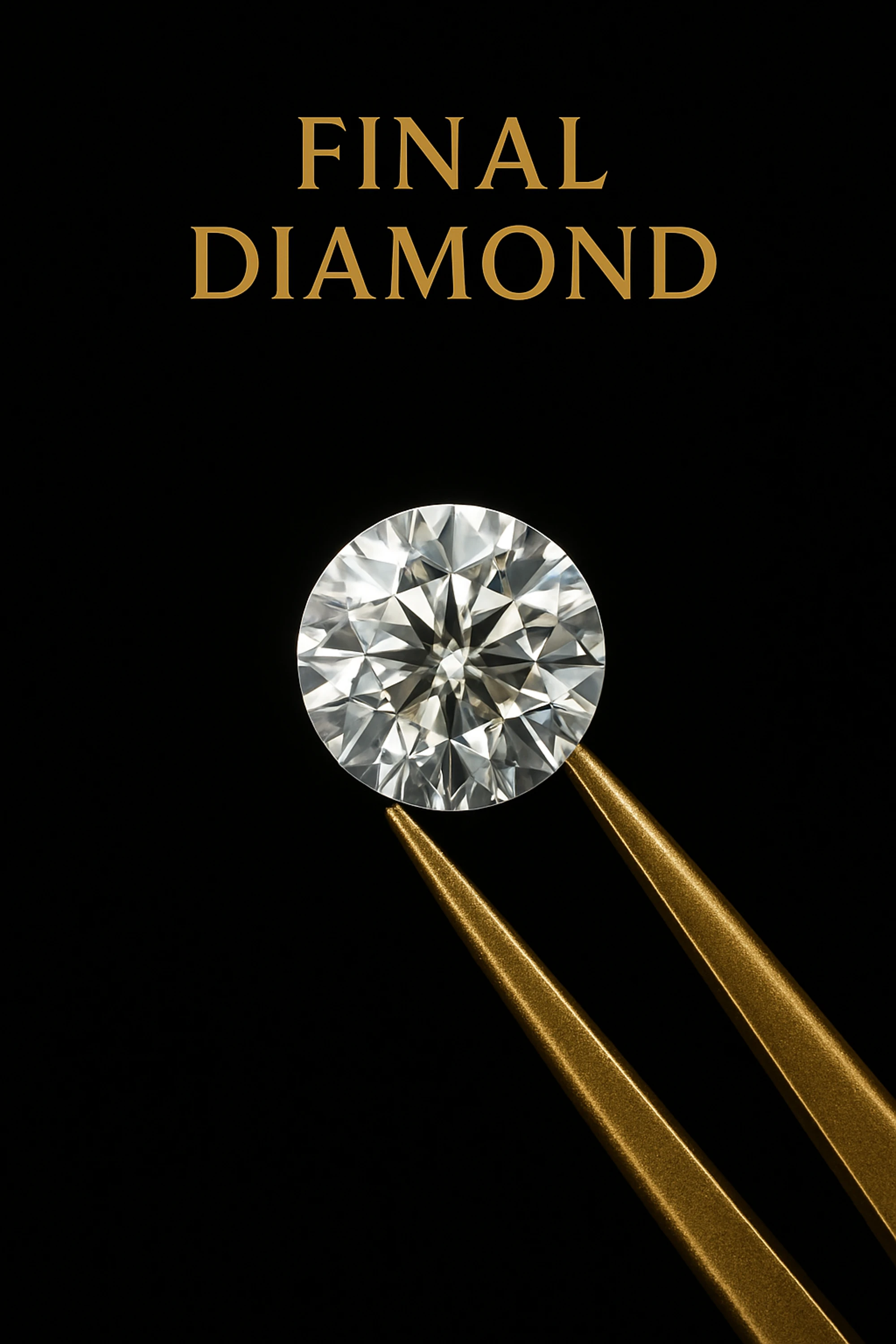
Quality at Every Stage

Expert examination ensures only the finest diamonds proceed
Not every lab grown diamond meets our standards. Throughout the growth process, technicians monitor temperature, pressure, and gas composition to ensure optimal conditions. Even small variations can affect clarity and color.
After growth, each rough crystal is evaluated. Diamonds with significant inclusions, color variations, or structural issues are set aside. Only the finest rough proceeds to cutting.
This rigorous quality control is why lab grown diamonds can achieve such consistent, high grades—the environment is controlled in ways that nature cannot match.
Better for the Planet
Lab grown diamonds offer significant environmental advantages over traditional diamond mining:
• No mining: Zero displacement of earth, ecosystems, or communities
• Lower carbon footprint: Modern facilities use renewable energy
• No water pollution: Eliminates acid mine drainage concerns
• Ethical certainty: Complete traceability from creation to you
• Sustainable scaling: Production can increase without environmental cost
Choosing a lab grown diamond means enjoying the same beauty, brilliance, and durability as a mined diamond—with a clear conscience about its origin.
Lab grown diamonds: Beautiful and sustainable
The Journey Continues
After growth, the rough diamond embarks on another remarkable journey—through the hands of master cutters who will reveal its inner fire. Learn about this transformation in our Craftsmanship guide.
Experience Lab Grown Excellence
Every diamond in our vault was grown using these advanced methods and certified by IGI. Discover exceptional quality at direct, near-wholesale pricing.
Explore Our Diamonds